Meaning
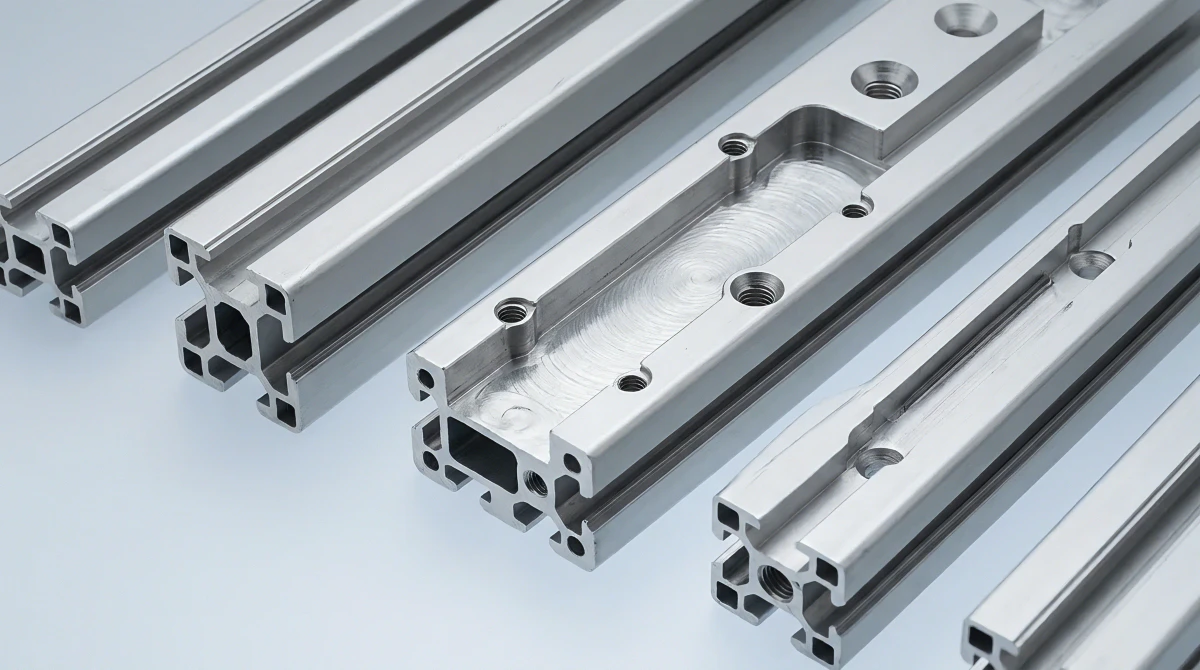
A precision saw makes the second, controlled cut that brings an extruded aluminum length to the tolerance on the drawing. It follows the press saw, which cuts bars to shipping lengths. It also decides how much burr work the length needs afterward.Why a Second Cut
The press saw is not built for close lengths. Alliance gives its standard cutting tolerance as 3.2 mm (0.125 in) or greater, depending on saw length. Any length on the drawing closer than that is cut again on a precision saw. The alternative is a machined end.Read More
What It Holds
A precision cut can be far closer than the standard tables. One enclosure maker, Bopla, states ±0.2 mm (0.008 in) for the lengths it cuts, and ±0.1 mm (0.004 in) on request. That is a vendor’s figure for its own parts. The same section can therefore carry very different length limits, depending on which saw made the last cut.Plastic Equivalent
For plastic profiles the closest cut is BWF’s offline saw. Under 500 mm (19.7 in) it holds ±0.3 mm (0.012 in), against ±0.5 mm for an inline cut. These precise lengths are measured and documented on a measuring table.Machine Class
A German saw maker ranks the machines for low-burr cutting. A manual chop saw cannot give a reliably burr-free cut, since its feed is uncontrolled. Semi-automatic up-cut saws are its base for professional work. CNC saws and double miter saws add controlled stops on top. The useful question for a supplier is how the profile is fed and held.