Meaning
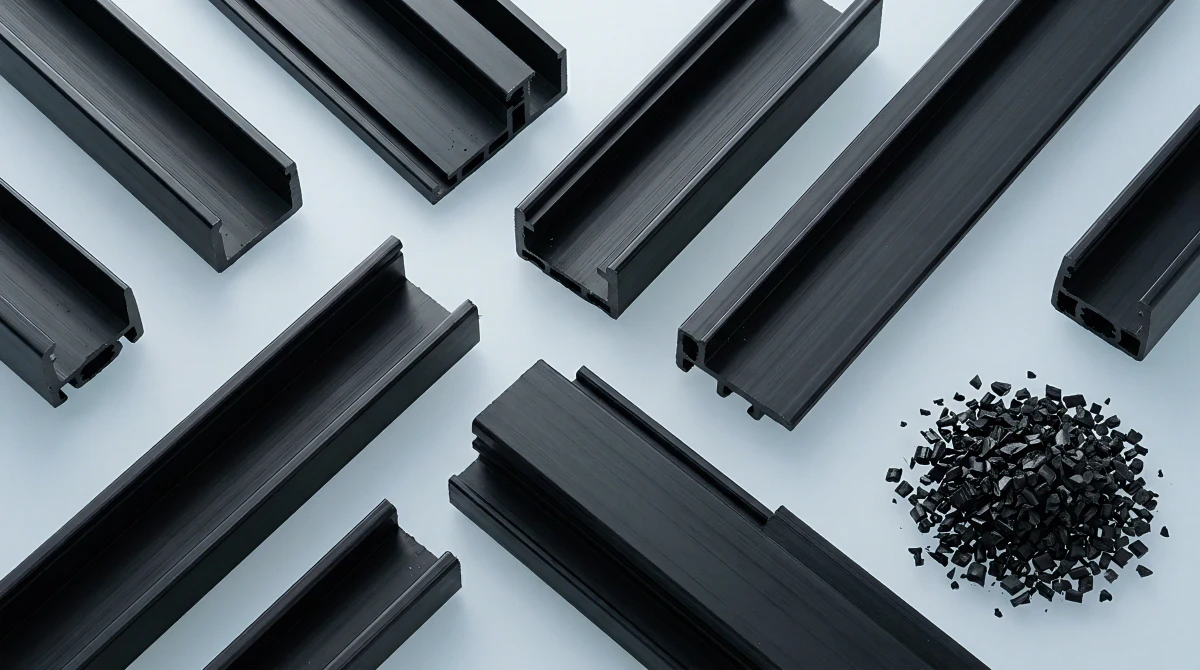
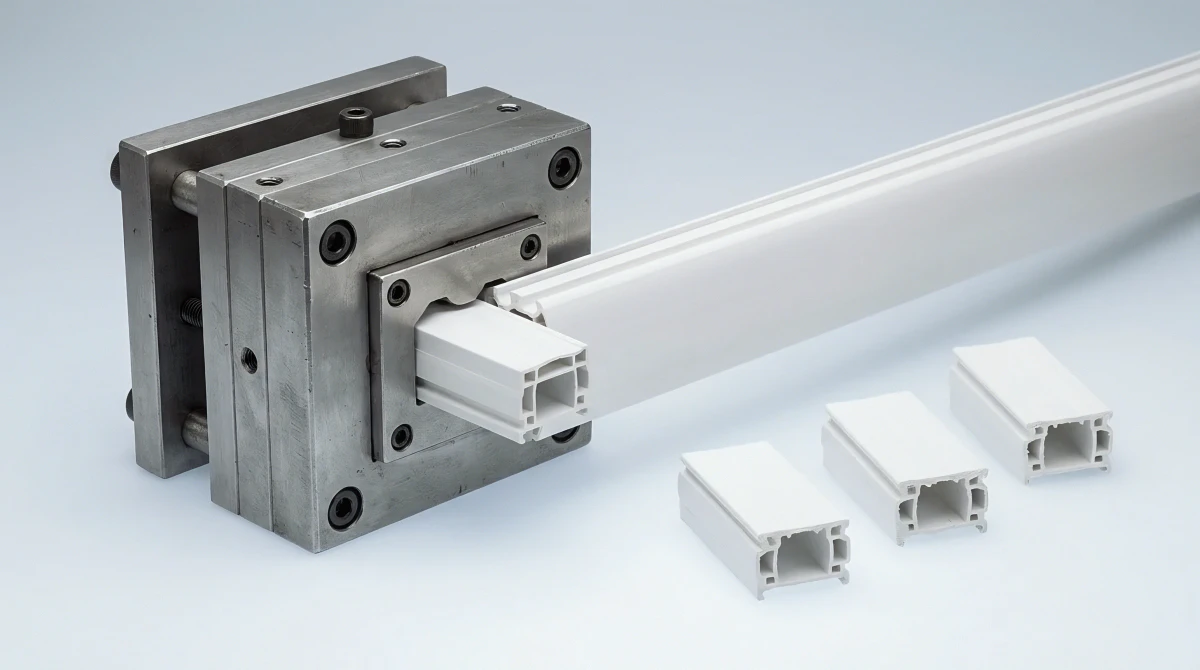
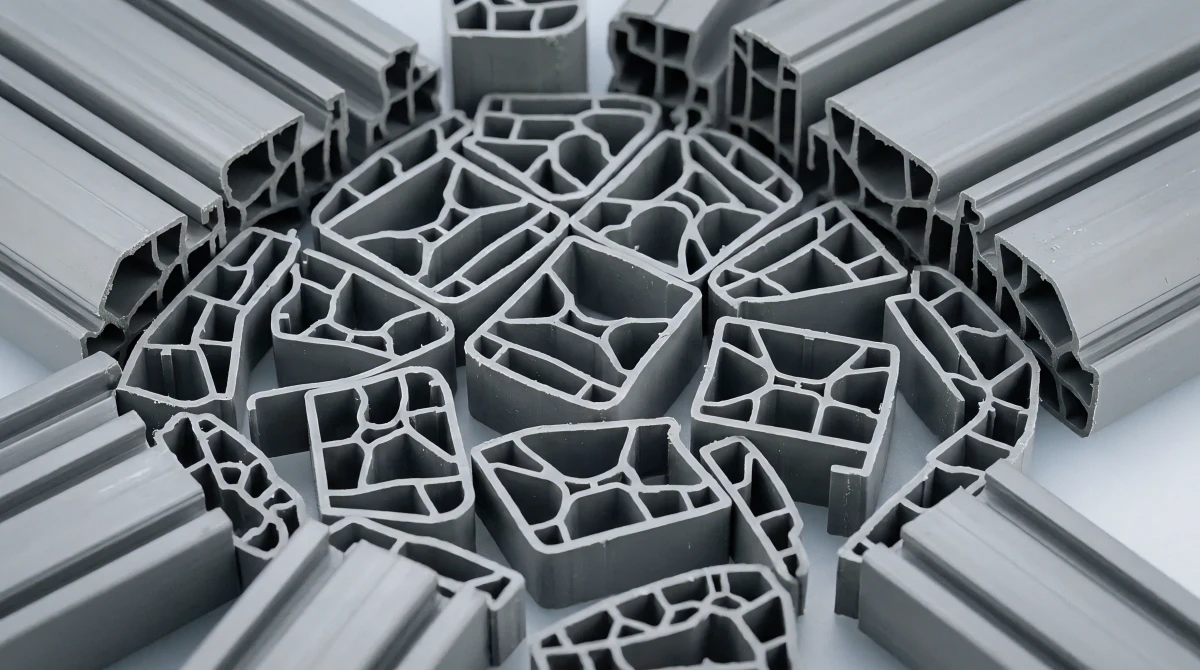
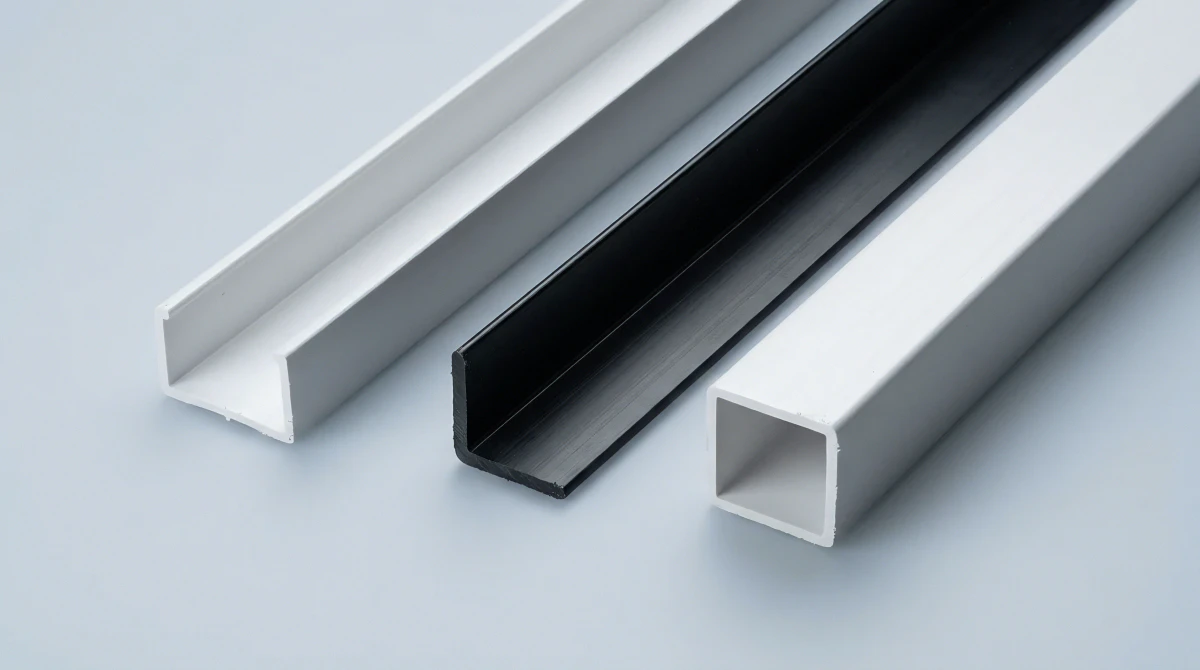
A plastic profile is a continuous thermoplastic length of constant cross-section, formed through a profile die, then sized, cooled, pulled and cut. Window seals and lighting diffusers are among the uses the sources name. Its tolerances, its length and its surface all depend on the stations after the die as much as on the die itself. Its length also moves with temperature and moisture far more than an aluminum length does.Line Stations
A typical plastic profile line has five parts, as a PVC compound maker’s guide lists them. An extruder melts and pumps the compound. A die with its adapter shapes the melt. Sizing and cooling equipment hold the shape while it freezes. A puller draws the profile at a constant speed, and a saw or knife cuts it to length. Dryers, chillers and compressed air serve those five. Specifying runs backward from the product, since the rate at which a section can be calibrated and cooled caps the output.Read More
Material Choice
The resin sets how the die is cut. Each thermoplastic has its own drawdown, the shrink built in between die and finished size. Rigid PVC tolerates only 4 to 10 %, while PETG can take 30 to 100 % at the same extruder rate. A die made for one resin is therefore not run with another. Polycarbonate, PMMA, ABS, PP and the PVC family all appear in the sources with their own processing windows.General Tolerances
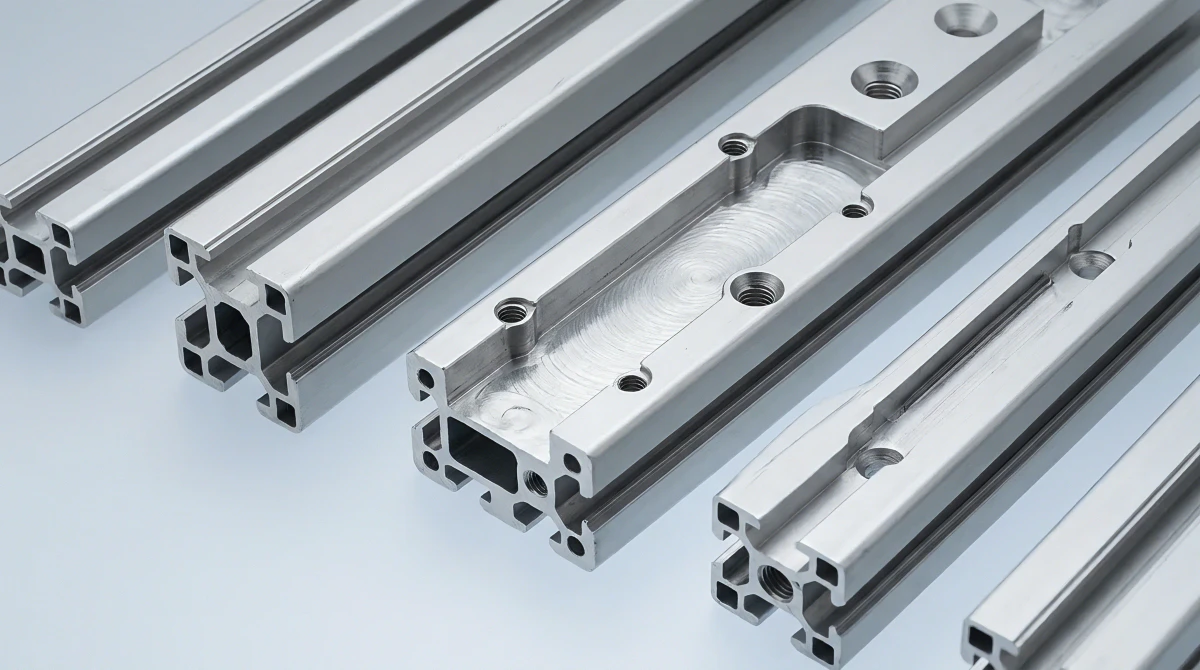
Where a drawing gives no tolerance, a plastic profile follows a general scheme. DIN 16941 sets general tolerances of size, form and orientation for thermoplastic profiles. BWF applies its series 2A and 2B by default. In those tables a 40 mm (1.57 in) width carries ±0.8 mm (0.031 in) and a 3 mm (0.12 in) wall ±0.4 mm (0.016 in). These figures run roughly twice the aluminum limits at the same sizes. Twist allowances fall from 5° on diameters up to 30 mm to 2° above 250 mm.Length and Climate
A plastic length belongs to a temperature and a humidity. BWF quotes lengths at 20 °C (68 °F) and 30 % relative humidity. Polycarbonate and PMMA grow about 0.7 mm per meter for each 10 °C of rise. A 4,000 mm (157.5 in) blank measured at 30 °C therefore reads 2.8 mm (0.11 in) long. Moisture taken up in storage also changes length, and uneven exposure can raise waves or bulges. BWF recommends storing profiles flat at about 20 °C and 50 % humidity.Cutting
The cut happens while the profile keeps moving. Straight lengths are usually sawn by a circular blade riding on a carriage synchronized with the puller. At line speeds too high for a carriage, a guillotine or a fly knife takes over. BWF distinguishes offline from inline cuts, and precise lengths from multiple lengths. A multiple length carries plus 20 mm (0.79 in) and is trimmed afterward on a crosscut saw.Surface and Color
Visible plastic faces are accepted by eye under stated conditions. BWF’s standard materials allow up to 5 inclusions per 1 kg (2.2 lb) of profile, none larger than 0.8 mm². Color is matched to a customer-approved strip at ΔE 3 or less, in reflected and transmitted light. A protective film covers the visible side and comes off within six months of delivery.Run Arithmetic
A plastic run is sized by dividing extruder output by profile weight. A 64 mm (2.5 in) extruder at 45 to 57 kg/h (100 to 125 lb/hr) gives 3.0 to 3.8 m/min of a 0.25 kg/m profile. At that rate, 2,000 m (6,562 ft) of profile is about 9 to 11 hours of steady running. Start-up scrap, the die trial and the changeover come on top, and for a short run they decide the schedule.Speed Limits
A running line can sometimes be pushed. Plastics Technology reports up to 20 % more line speed from raising puller and extruder together. It applies to low-drawdown, low-swell materials such as the polyolefins. Higher speed brings more shrinkage, so the sizing tooling may need a new setting. A new resin, a new wall or a new size usually needs new tooling.