Calibrator

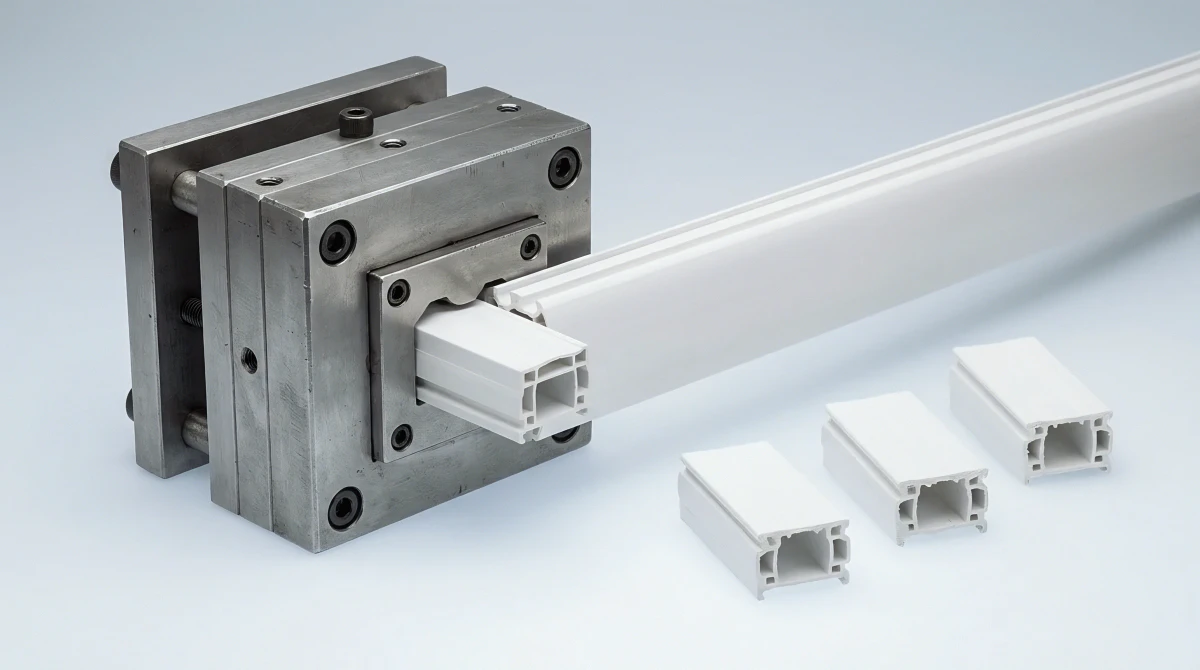
A calibrator is the cooled steel sizing tool after a plastic profile die that holds the hot extrudate to shape while it freezes.

Every Calibrator article of the Profile Extrusion Resources, newest first, each written from published standards, research and makers’ data.

Meaning

A calibrator is the cooled steel sizing tool after a plastic profile die that holds the hot extrudate to shape while it freezes. Vacuum ports in its segments pull the plastic against the steel. The die forms the shape, and the calibrator sets the size.

Construction

Plastics Technology describes internally cooled steel segments with vacuum ports, which shape the profile and speed heat transfer. Calibrators come in dry, wet and combined styles, chosen by the output wanted. Hollow sections are calibrated wet, often with different vacuum levels inside and out, so their chambers stay open. Calibrators for hollows once passed 1.8 m (6 ft) in length.
Read More

Size Control

Newey’s process paper names formers or calibrators as what sets the final size and shape. Calibration tooling takes longer to build than an air rack, and it holds size where an air rack drifts. Plastics Technology says the extra cost returns as better profile quality and less scrap.

Temperature

Some materials need a warm calibrator. Newey describes water or oil heated calibrators for engineering thermoplastics that need slower cooling. SABIC lists a first calibration temperature of 70 to 90 °C (158 to 194 °F) for LEXAN 135 polycarbonate. In every case the profile leaves calibration below its heat distortion temperature.

Resin Changes

A calibrator is set for the swell of one resin. A new lot that swells more at the die overpacks it and makes the wall uneven. A lot that swells less leaves it unfilled, and the extrudate folds in. Any change of resin source or grade calls for a fresh trial, however similar the datasheets look.
Planning a Plastic Profile Extrusion Run From Die Trial to Regrind

A plastic profile run is a tooling set tied to one resin, a trial that makes scrap, and steady hours that arithmetic on kilograms per hour can size.

What a Plastic Profile Run Is Made OfFour parts make a run: the tooling set, the start-up, the steady production and the changeover at the end. Each has its own tool, its own time and its own scrap, and a buyer who plans a quantity needs to ask about all four.

Plastic Profile Extrusion Line From Die Lip to Cut Length

A profile die only suggests the shape, and the sizer, puller and saw that follow have to hold the size until the plastic is solid.

The Stations of a Plastic Profile Line From Hopper to SawA typical line has five parts: an extruder, a die with its adapter, sizing and cooling equipment, a puller, and a way to cut the profile to length. The same five appear in a rigid vinyl guide from a PVC compound maker.

Polycarbonate Extruded Profile Properties and What the Datasheet Leaves Out

Read the resin sheet for viscosity, heat and growth, then ask what it leaves out about the profile itself.

What a Polycarbonate Datasheet States for Profile GradesTwo documents are read side by side here. SABIC's datasheet for LEXAN 135 resin describes the highest-viscosity linear polycarbonate powder in its range, and it names profile extrusion as the processing method.

Send the Section Drawing of Your Profile

Send the 2D drawing and the 3D file, with the quantity and the stage of the project. An engineer replies within 1 working day.

The quote form, the mutual NDA and the private folder for your files are on Protolis Atelier, with Profile Extrusion chosen.

Request a Quote