Rigid PVC

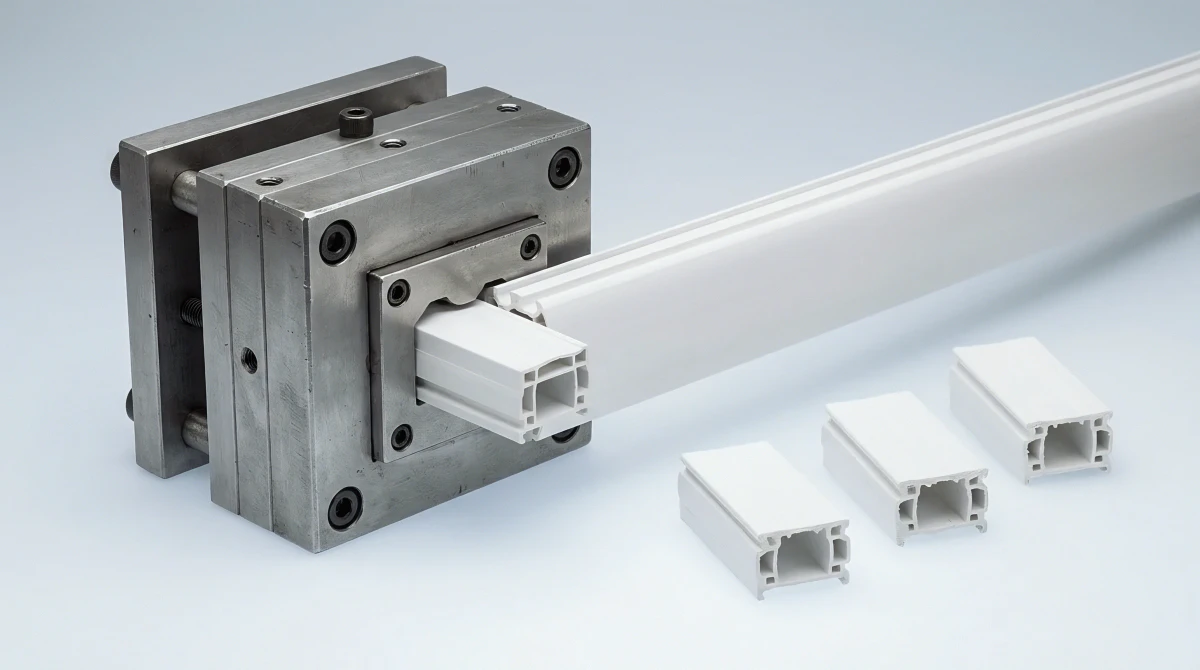
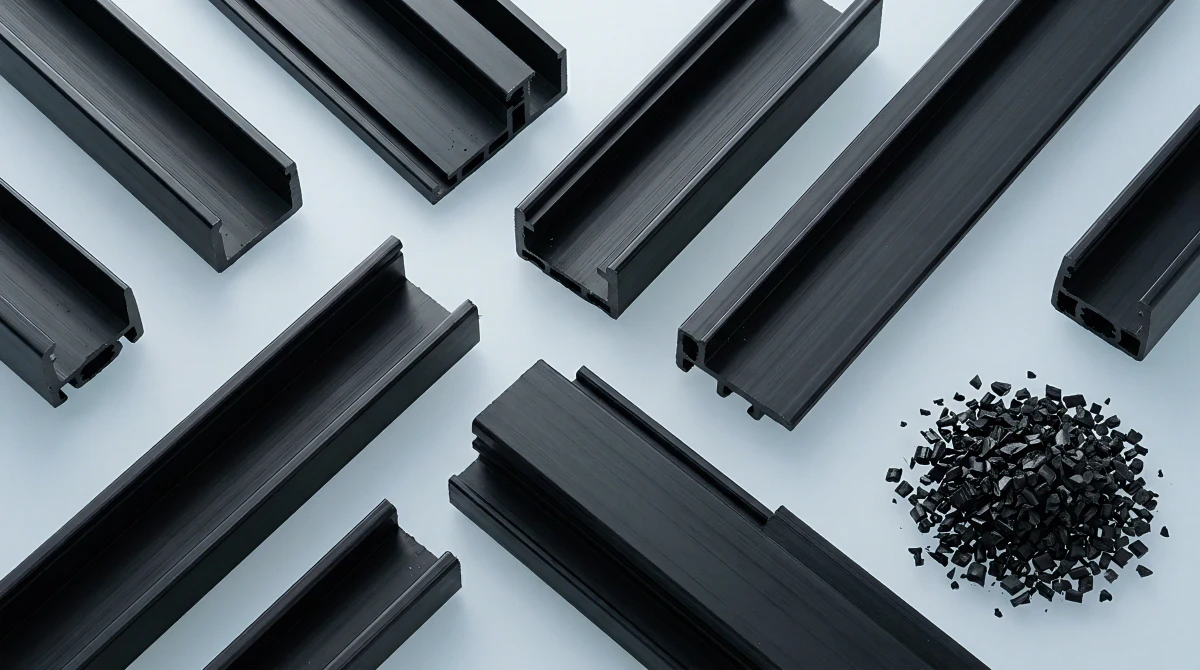
Rigid PVC is the stiff form of polyvinyl chloride used for many extruded profiles, fed to the extruder as cubes or pellets.

Every Rigid PVC article of the Profile Extrusion Resources, newest first, each written from published standards, research and makers’ data.

Meaning

Rigid PVC is the stiff form of polyvinyl chloride used for many extruded profiles, fed to the extruder as cubes or pellets. It draws down very little, runs in a narrow temperature window and needs care at the end of a run. Most of the troubleshooting data in these resources comes from rigid PVC guides.

Drawdown Limit

Rigid PVC tolerates a drawdown of only 4 to 10 %. Plastics Technology says larger drawdown builds high residual stress and brittleness on impact. The same low drawdown means a rigid PVC die cannot be pushed to a smaller size. A new size needs new tooling.
Read More

Processing Window

The GEON guide gives at least 188 to 193 °C (370 to 380 °F) to develop properties. Where output and uniformity matter more, it names 202 to 210 °C (395 to 410 °F). For pellets, a Teknor Apex guide says drying is typically not needed. If wanted, it suggests 2 to 3 hours at 49 °C (120 °F). A screw of 24 to 1 length to diameter suits cubes or pellets.

Regrind

The GEON guide accepts 10 to 30 % rigid PVC regrind mixed with virgin compound. More is possible if the surface stays acceptable. Barrel temperatures may need to rise by up to about 6 °C (10 °F) for the extra work. The guide also lists regrind among causes of edge tear and surface defects.

Purge and Die Care

A run ends with a PVC purging compound. Teknor Apex then has the die and its parts neutralized to remove residual hydrochloric acid. PVC should never follow acetal on the same line, since the two react violently.

Cutting

Both PVC guides accept three cutting tools for profiles: a sharp saw, a fly knife and a guillotine. Straight lengths are usually cut by a saw riding on a carriage with the haul-off.

TPE and Flexible PVC for Extruded Seals and Gaskets

Specify a seal compound by hardness, stress at a stated strain and direction, and compression set at service heat, not by hardness alone.

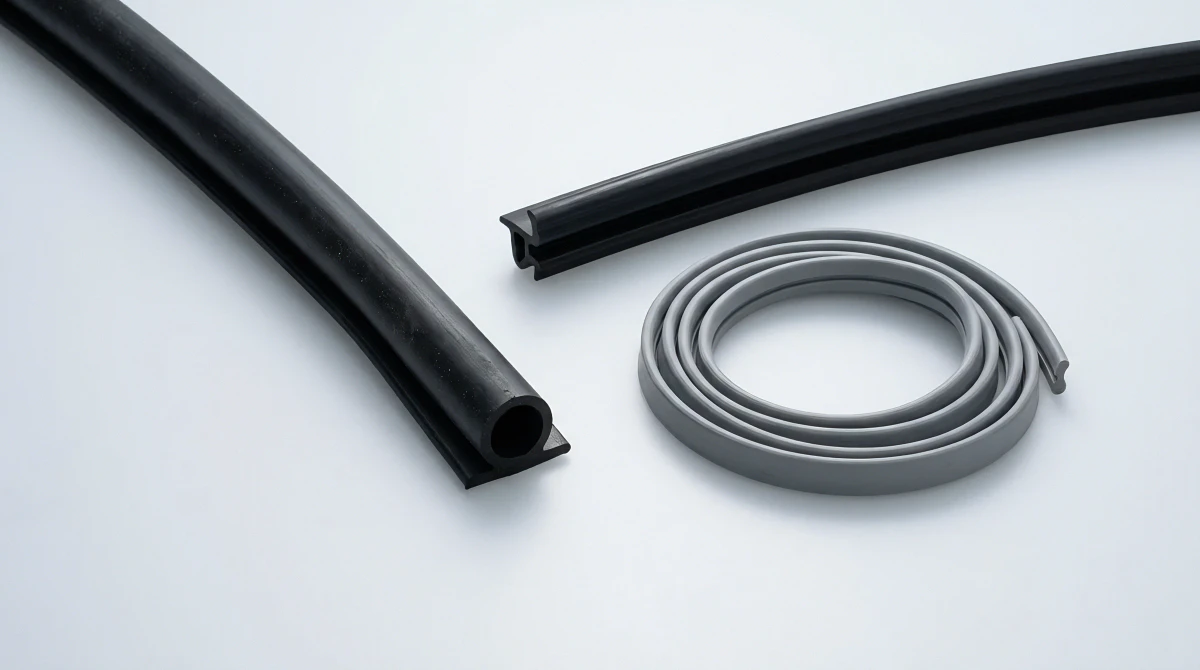
Flexible PVC, TPE-S and TPV for Extruded SealsHEXPOL TPE offers three families for profile extrusion, soft PVC, TPS and TPV, in hardnesses from 20 Shore A to 60 Shore D. Its list of profile uses covers window and door profiles, waterstops, keder profiles, automotive weather seals, train profiles, furniture edges and the door seals of refrigerators and washing machines.
Rigid PVC Compounds for Extruded Profiles

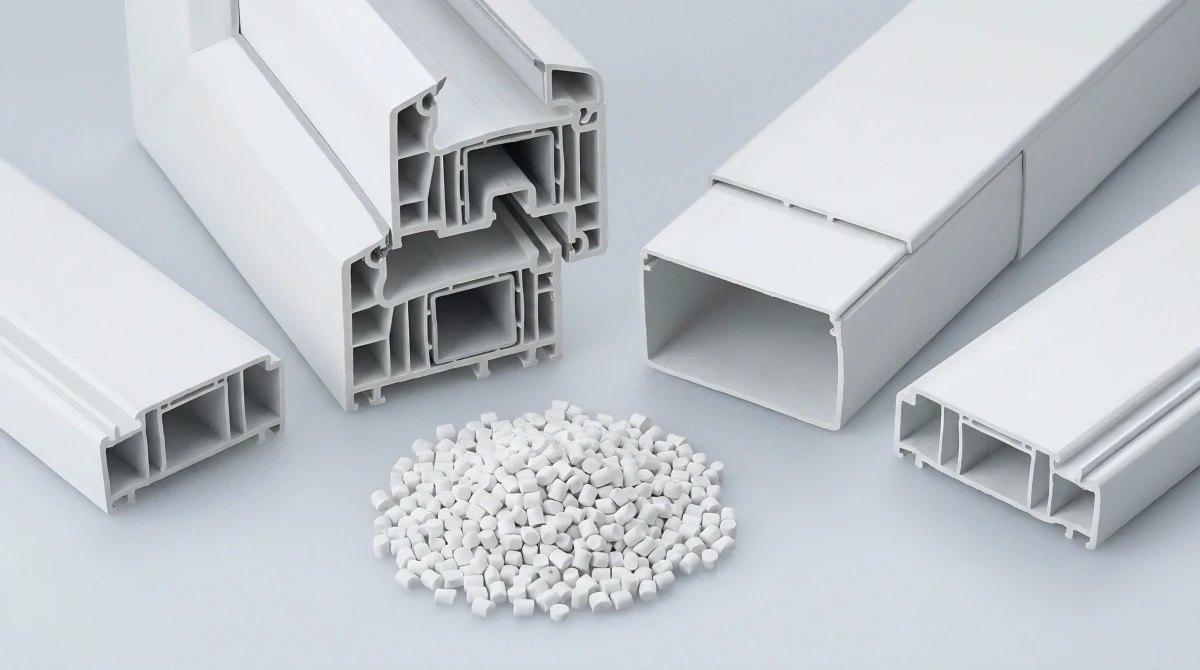
Rigid PVC profiles are stiff and easy to extrude, but their glass transition sets the heat limit, so name service temperature and color with the compound.

What a Rigid PVC Extrusion Compound ContainsRigid PVC, also written PVC-U for unplasticized, is polyvinyl chloride without plasticizer. It is never extruded as bare resin.

Planning a Plastic Profile Extrusion Run From Die Trial to Regrind

A plastic profile run is a tooling set tied to one resin, a trial that makes scrap, and steady hours that arithmetic on kilograms per hour can size.

What a Plastic Profile Run Is Made OfFour parts make a run: the tooling set, the start-up, the steady production and the changeover at the end. Each has its own tool, its own time and its own scrap, and a buyer who plans a quantity needs to ask about all four.

Plastic Profile Extrusion Line From Die Lip to Cut Length

A profile die only suggests the shape, and the sizer, puller and saw that follow have to hold the size until the plastic is solid.

The Stations of a Plastic Profile Line From Hopper to SawA typical line has five parts: an extruder, a die with its adapter, sizing and cooling equipment, a puller, and a way to cut the profile to length. The same five appear in a rigid vinyl guide from a PVC compound maker.

Cutting and Machining Extruded Aluminum Lengths

A press saw makes bars into shippable lengths, and a precision saw with the right blade, clamps and datums makes the length the drawing asks for.

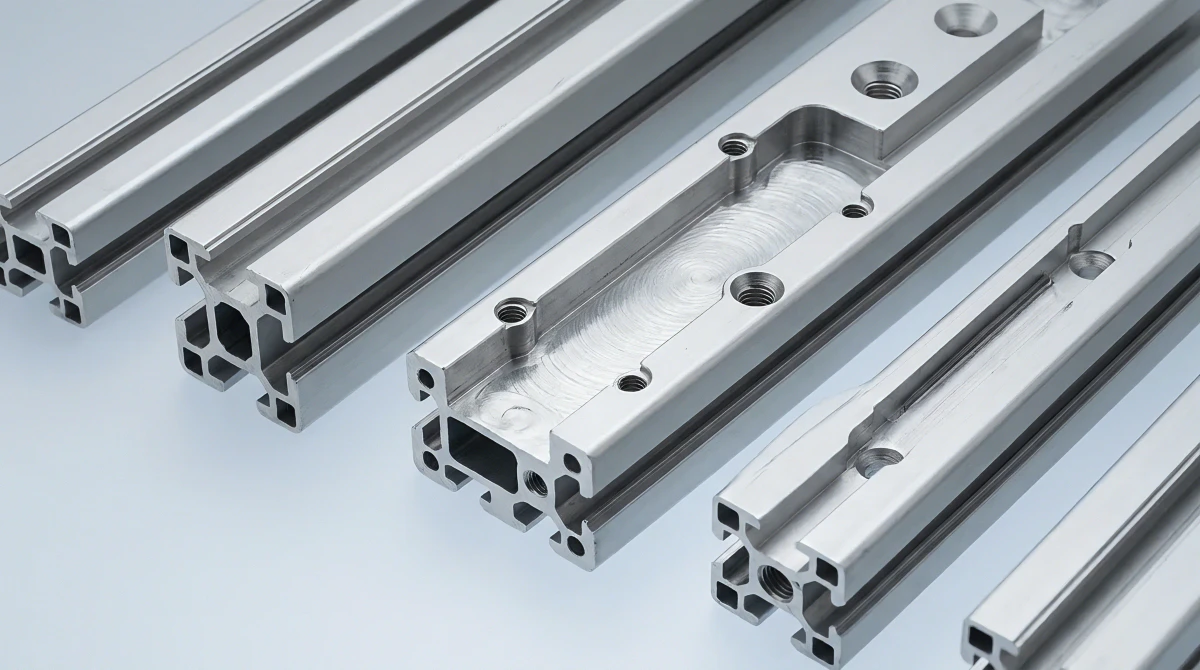
The Order of Operations From Bar to Cut LengthCutting comes first in almost any fabrication plan, with deburring and then drilling, punching or machining after it. A burr left from the cut sits where the clamp has to hold the piece for the next step, so the order carries weight.

Send the Section Drawing of Your Profile

Send the 2D drawing and the 3D file, with the quantity and the stage of the project. An engineer replies within 1 working day.

The quote form, the mutual NDA and the private folder for your files are on Protolis Atelier, with Profile Extrusion chosen.

Request a Quote