Shrinkage

Shrinkage is the reduction in a profile's size as it cools after the die or as frozen-in stress later relaxes, allowed for in die sizing and service.

Every Shrinkage article of the Profile Extrusion Resources, newest first, each written from published standards, research and makers’ data.

Meaning

Shrinkage is the reduction in a profile’s size as it cools after the die or as frozen-in stress later relaxes, allowed for in die sizing and service.

In the Die

In a porthole die study for AA6063, the authors enlarged the die orifice 1.01 times the drawing size to allow for shrinkage as the profile cooled. In plastic profile extrusion, higher line speeds are associated with greater shrinkage of the product, so sizing is adjusted for it.
Read More

Post-Shrinkage in PVC

BASF reports that rigid PVC shrinks permanently once heated above 60 °C (140 °F). In its test, a pure PVC profile held at rising temperatures up to 100 °C (212 °F) shrank by up to 1.2 %, which is 12 mm on a 1 m length (0.47 in on 39 in), while a PVC and PBT hybrid shrank 0.13 %. With heat on one side, the result is permanent curvature.

Residual Stress

GEON traces excessive thermal shrinkage to high residual stress and prescribes less draw-down and a slower cooling rate.

Direction

Elastron gives mold shrinkage of 2.25 % along the flow and 1.10 % across it for its V251.A75.B TPV, measured to ASTM D955.

Specification

Post-shrinkage is not part of ASTM D1784’s classification, so a profile that will see heat has the requirement written into the order.

Beside Thermal Expansion

Shrinkage is permanent; thermal expansion is reversible. BASF gives rigid PVC an expansion of 70 × 10⁻⁶/K, so a 1 m (39 in) profile warming by 40 K (72 °F) grows 2.8 mm (0.11 in) and returns as it cools, while post-shrinkage stays.

TPE and Flexible PVC for Extruded Seals and Gaskets

Specify a seal compound by hardness, stress at a stated strain and direction, and compression set at service heat, not by hardness alone.

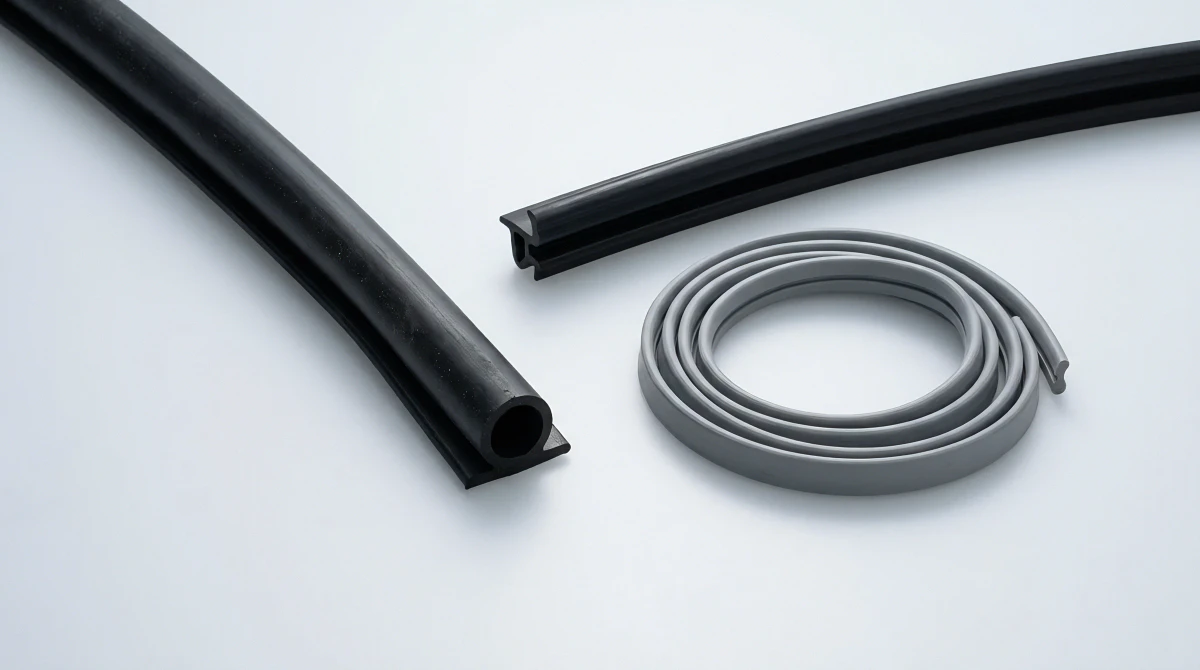
Flexible PVC, TPE-S and TPV for Extruded SealsHEXPOL TPE offers three families for profile extrusion, soft PVC, TPS and TPV, in hardnesses from 20 Shore A to 60 Shore D. Its list of profile uses covers window and door profiles, waterstops, keder profiles, automotive weather seals, train profiles, furniture edges and the door seals of refrigerators and washing machines.

Rigid PVC Compounds for Extruded Profiles

Rigid PVC profiles are stiff and easy to extrude, but their glass transition sets the heat limit, so name service temperature and color with the compound.

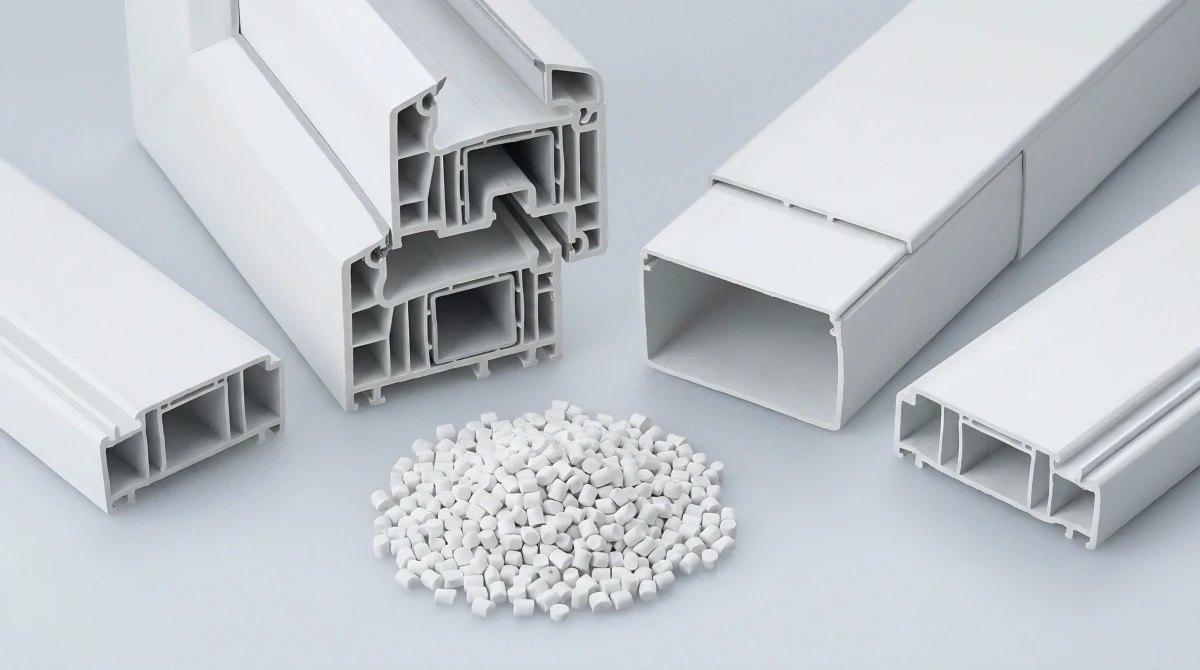
What a Rigid PVC Extrusion Compound ContainsRigid PVC, also written PVC-U for unplasticized, is polyvinyl chloride without plasticizer. It is never extruded as bare resin.

Planning a Plastic Profile Extrusion Run From Die Trial to Regrind

A plastic profile run is a tooling set tied to one resin, a trial that makes scrap, and steady hours that arithmetic on kilograms per hour can size.

What a Plastic Profile Run Is Made OfFour parts make a run: the tooling set, the start-up, the steady production and the changeover at the end. Each has its own tool, its own time and its own scrap, and a buyer who plans a quantity needs to ask about all four.

Plastic Profile Extrusion Line From Die Lip to Cut Length

A profile die only suggests the shape, and the sizer, puller and saw that follow have to hold the size until the plastic is solid.

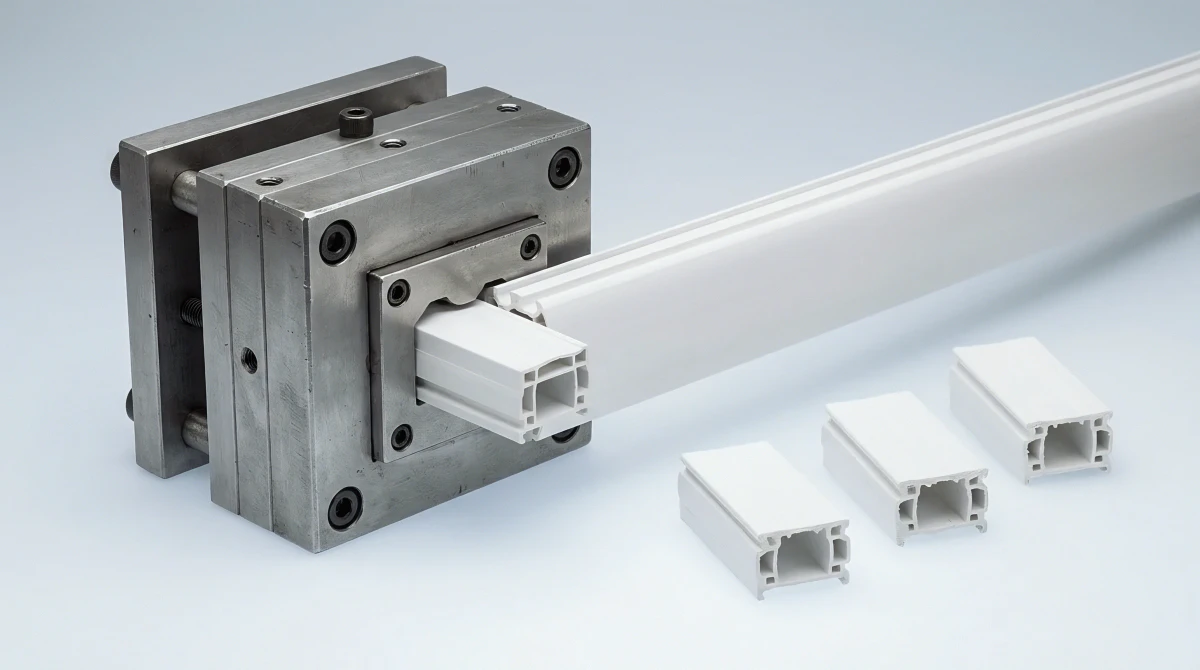
The Stations of a Plastic Profile Line From Hopper to SawA typical line has five parts: an extruder, a die with its adapter, sizing and cooling equipment, a puller, and a way to cut the profile to length. The same five appear in a rigid vinyl guide from a PVC compound maker.

Send the Section Drawing of Your Profile

Send the 2D drawing and the 3D file, with the quantity and the stage of the project. An engineer replies within 1 working day.

The quote form, the mutual NDA and the private folder for your files are on Protolis Atelier, with Profile Extrusion chosen.

Request a Quote