Saw

A saw is the machine that cuts an extruded profile into lengths, from the aluminum press saw to a plastic line's moving saw.

Every Saw article of the Profile Extrusion Resources, newest first, each written from published standards, research and makers’ data.

Meaning

A saw is the machine that cuts an extruded profile into lengths, from the aluminum press saw to a plastic line’s moving saw. A length tolerance, a squareness limit and a burr limit are all properties of a saw step. The same profile can carry very different tolerances depending on which saw cut it. The saw also takes a kerf of material with every cut.

Press Saw

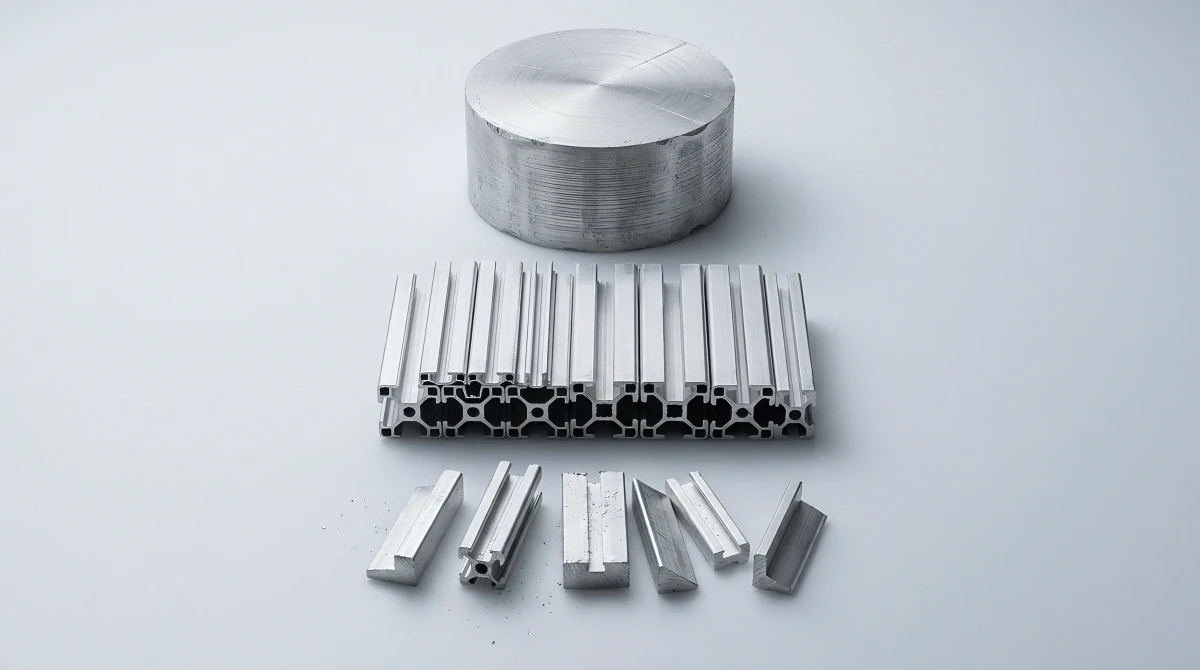
On an aluminum line the first saw works on the stretched bar. A University of Illinois thesis describes a fast circular blade, with each section pushed up to a gauge stop. High-pressure vacuum clears the chips, and a suitable section can be cut several bars at a time. That saw trims the grip marks and the bar ends, and cuts the shipping lengths. Alliance gives its standard cutting tolerance as 3.2 mm (0.125 in) or greater on a 5.5 m (18 ft) bar. For continuous lengths, a flying saw on the run-out table makes the first cut.
Read More

Precision Saw

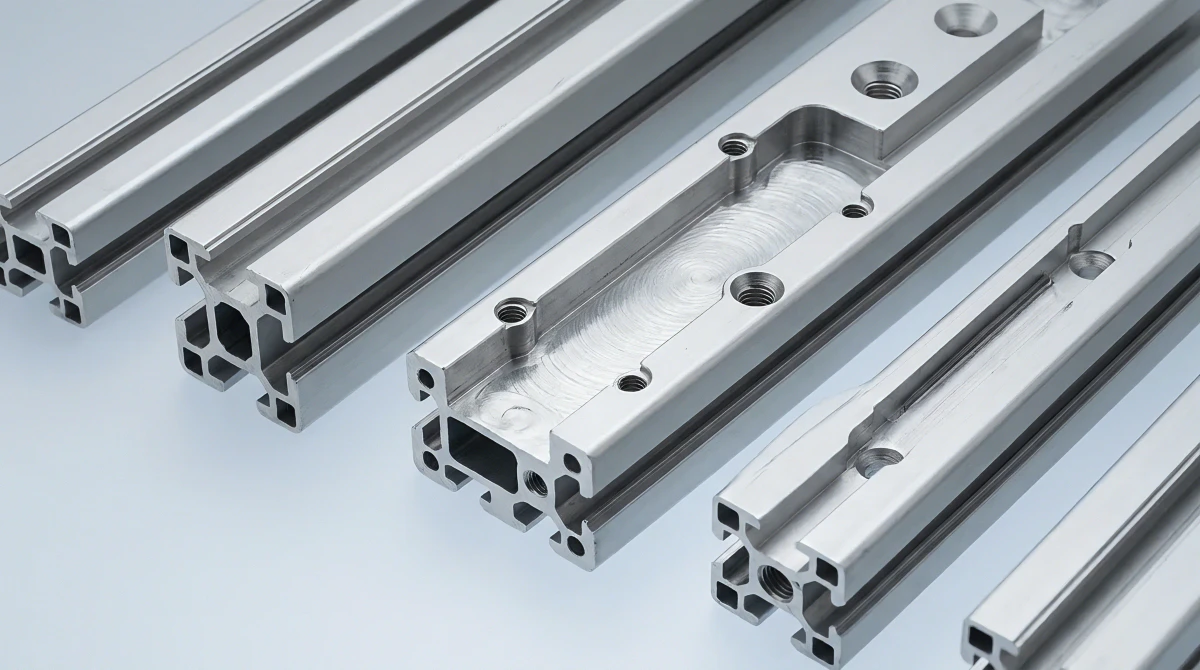
A length closer than the press saw allows needs a second cut. An enclosure maker, Bopla, states ±0.2 mm (0.008 in) for its cut aluminum profiles, and ±0.1 mm (0.004 in) on request. The Aluminum Association’s own length table, by contrast, allows plus 3.2 mm (1/8 in) on lengths up to 3.66 m (12 ft). The gap between those figures is the work of the second saw.

Blade Geometry

Vendors agree on a few blade features for aluminum extrusions. A triple-chip grind shares each cut between one tooth that roughs and one that finishes. A negative hook of about minus 5 to minus 6 degrees makes the tooth scrape under control. Many teeth per blade mean a thin wall is always held by more than one of them. Amana lists a 178 mm (7 in) carbide blade with 58 teeth and a minus 6 degree hook for thin-walled extrusions. These are makers’ statements about their own blades, so a drawing judges the cut rather than naming a blade.

Kerf and Yield

The saw’s cut width is metal that never ships. Moreschi narrowed a kerf from 4.6 mm to 2.5 mm (0.18 to 0.10 in). The count from a six-meter bar rose from 410 to 480 pieces. Those counts imply pieces of about 10 mm (0.39 in). For 500 mm (19.7 in) pieces the same change gains nothing. On short pieces kerf decides material use, and on long ones the burr matters more.

Holding the Profile

A saw cut is only as good as the clamping. Clamping near the cut line, left and right of the blade, stops the offcut from dropping early and tearing a burr. Clamps acting both down and sideways hold the section still, at a pressure set for thin or hollow walls. A minimum quantity lubrication film keeps aluminum from welding to the carbide. Evomatec ranks a manual chop saw below a semi-automatic up-cut saw for repeatable low-burr cutting.

Plastic Line Saws

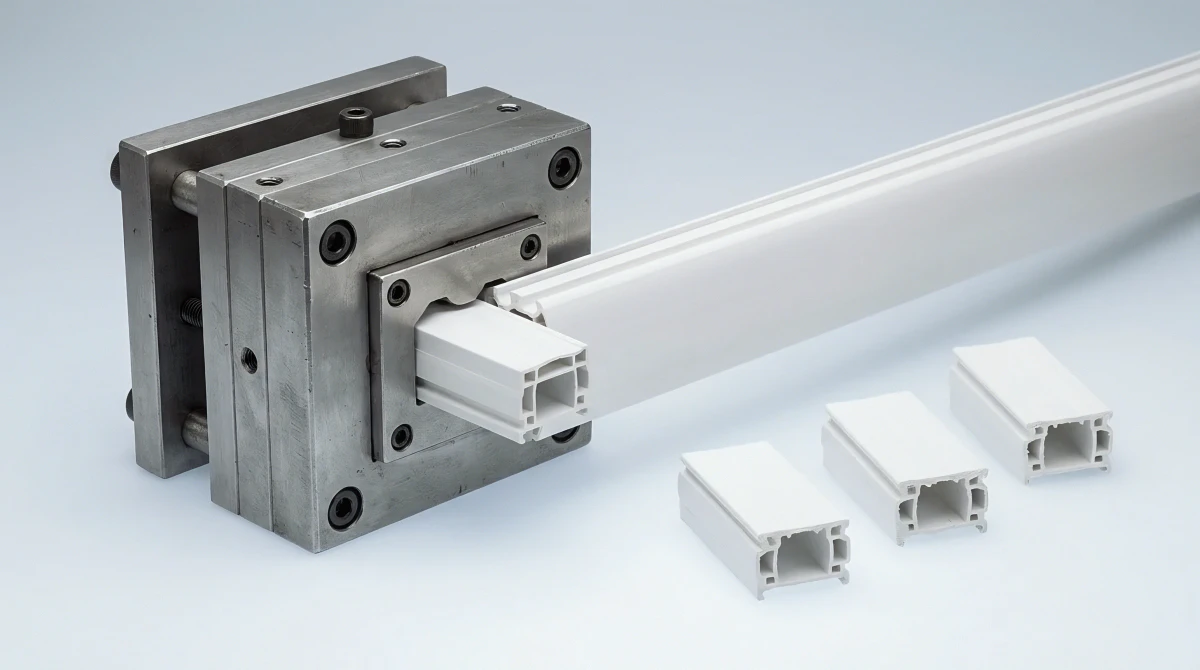
A plastic line never stops for the cut. Its saw rides a carriage at haul-off speed, or for very large pipe it orbits the pipe as a planetary saw. When the line is too fast for a carriage, a guillotine or a fly knife replaces the saw. Length is then set by the saw’s synchronization rather than by a gauge stop.

Offline and Inline

BWF publishes separate saw tolerances for offline and inline cuts of polycarbonate and PMMA. Under 500 mm (19.7 in), the offline cut holds ±0.3 mm (0.012 in) and the inline cut ±0.5 mm (0.020 in). From 1,000 mm (39.4 in) up, both share one staircase of about 1 mm per meter. Past 4,500 mm (177.2 in) the blank is measured by tape at ±0.1 %, and no angle test is possible.

Saw on the Order

A length on a drawing belongs to a particular saw step. On one cut list mixing plastic and aluminum lengths, the acceptance windows span more than tenfold. The drawing therefore says whether the length comes from the press saw, a precision saw or an inline cut. The order also says whether burrs are allowed at the ends.

How Much of an Aluminum Billet Becomes Shipped Profile

Order weight, butt, stretcher ends and rejects decide how many billets a small aluminum extrusion run takes and what the buyer receives.

The Yield Stack From Billet to Shipped LengthA billet is heated, pushed through a die, quenched, stretched, sawn and aged. Metal leaves the stream at three points, and each has a figure in the published sources.

Plastic Profile Extrusion Line From Die Lip to Cut Length

A profile die only suggests the shape, and the sizer, puller and saw that follow have to hold the size until the plastic is solid.

The Stations of a Plastic Profile Line From Hopper to SawA typical line has five parts: an extruder, a die with its adapter, sizing and cooling equipment, a puller, and a way to cut the profile to length. The same five appear in a rigid vinyl guide from a PVC compound maker.

Cutting and Machining Extruded Aluminum Lengths

A press saw makes bars into shippable lengths, and a precision saw with the right blade, clamps and datums makes the length the drawing asks for.

The Order of Operations From Bar to Cut LengthCutting comes first in almost any fabrication plan, with deburring and then drilling, punching or machining after it. A burr left from the cut sits where the clamp has to hold the piece for the next step, so the order carries weight.

Aluminum Extrusion Process From Billet to Aged Profile

The press pushes a softened billet through a die, and the quench, stretch and oven that follow decide whether the bar is straight and strong.

The Steps of Aluminum Extrusion in the Order the Metal Meets ThemSeven operations turn a cast billet into a profile ready for finishing. A billet is a solid cylinder of cast aluminum, and it never melts on the way.

Cut Length and Saw Cut Tolerance of Extruded Profiles

A length tolerance belongs to a cutting step and a measuring method, so name both with the number.

Saw Tolerances for Plastic Profile LengthsBWF's guidelines of 20 November 2024 give saw tolerances for polycarbonate and PMMA profiles in two cases, offline cut and inline cut. Each is tabulated against the length, in millimeters, and each is tied to a method: lengths up to 4,500 mm are measured on a measuring table that checks length and angle, and longer ones with a measuring tape.

DIN 16941 General Tolerances for Extruded Plastic Profiles

Cite the edition and the series on the drawing, then add what the general tolerances leave open.

What DIN 16941 CoversThe current edition is DIN 16941:2012-11, titled Thermoplastics extruded profiles, General tolerances of size, form and orientation, with the German title Extrudierte Profile aus thermoplastischen Kunststoffen, Allgemeintoleranzen für Maße, Form und Lage. It is published in German, with an English translation sold separately, and it replaces DIN 16941:1986-05.

Polycarbonate Extruded Profile Properties and What the Datasheet Leaves Out

Read the resin sheet for viscosity, heat and growth, then ask what it leaves out about the profile itself.

What a Polycarbonate Datasheet States for Profile GradesTwo documents are read side by side here. SABIC's datasheet for LEXAN 135 resin describes the highest-viscosity linear polycarbonate powder in its range, and it names profile extrusion as the processing method.

Send the Section Drawing of Your Profile

Send the 2D drawing and the 3D file, with the quantity and the stage of the project. An engineer replies within 1 working day.

The quote form, the mutual NDA and the private folder for your files are on Protolis Atelier, with Profile Extrusion chosen.

Request a Quote