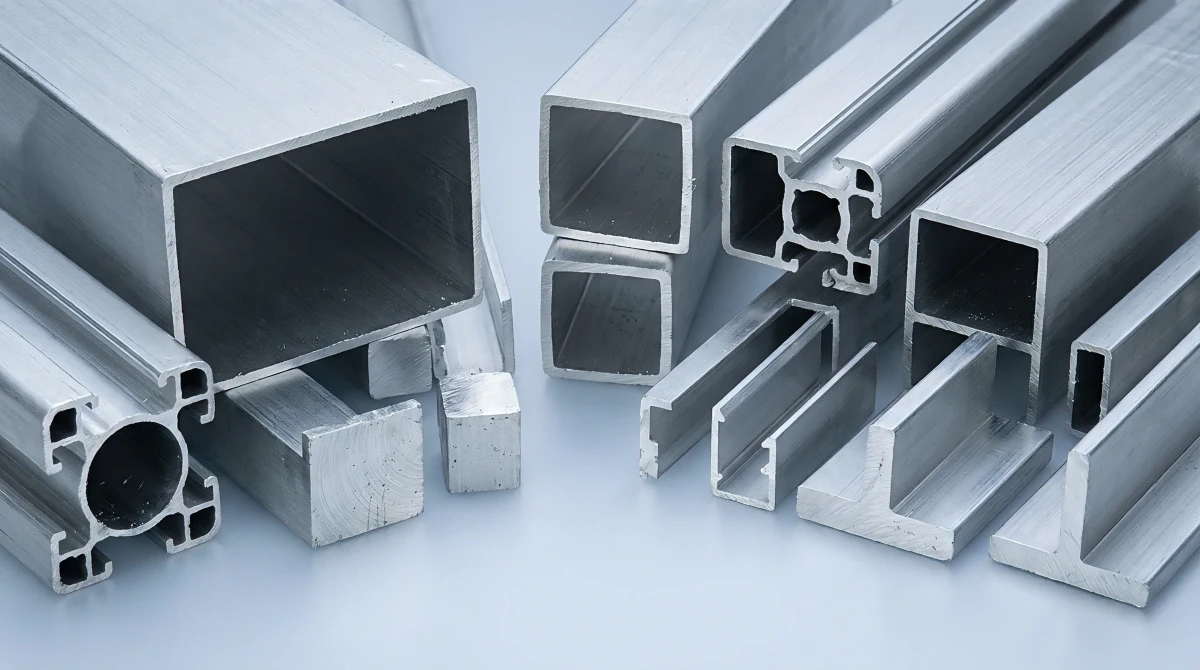
Solid Profile

A solid profile is an extruded section with no enclosed or partly enclosed void in its cross-section.

Every Solid Profile article of the Profile Extrusion Resources, newest first, each written from published standards, research and makers’ data.

Meaning

A solid profile is an extruded section with no enclosed or partly enclosed void in its cross-section. It is the simplest case for the die and for the tolerance tables. Bar and open shapes, such as a channel between two legs, fall in this group.

Die

A solid profile runs through a flat steel die with its outline cut through the plate. A pocket or a weld plate in front of the die can help control metal flow. No mandrel and no seam weld are involved. Small solid shapes can share one die, and an AEC manual figure shows six coming out together.
Read More

Die Life

Solid dies outlast hollow dies at the same wall. In the AEC table, a solid die with 1.0 to 1.5 mm walls lasts about 1.8 t (4,000 lb) before bearing wear without nitriding. The hollow die at that wall lasts about 1.1 t (2,500 lb). Over their whole lives the figures are 33.6 t against 19.1 t.

Tolerance Tables

The Aluminum Association’s video guide sends solid profiles to Table 11.2 for cross-section limits. Flatness for bar, solid and semihollow profiles is read from Table 11.8. Its factors equal or undercut those of Table 11.9 for hollows. A solid face therefore gets the same or less room to depart from flat.

Strength Rows

Some alloy sheets split their rows between open and hollow sections. Hydro’s 6005A-T6 sheet gives an open section up to 5 mm (0.20 in) 225 MPa (32.6 ksi) yield. A hollow of the same wall gets 215 MPa (31.2 ksi). A solid or open shape is read from the open rows.
Aluminum Extrusion Process From Billet to Aged Profile

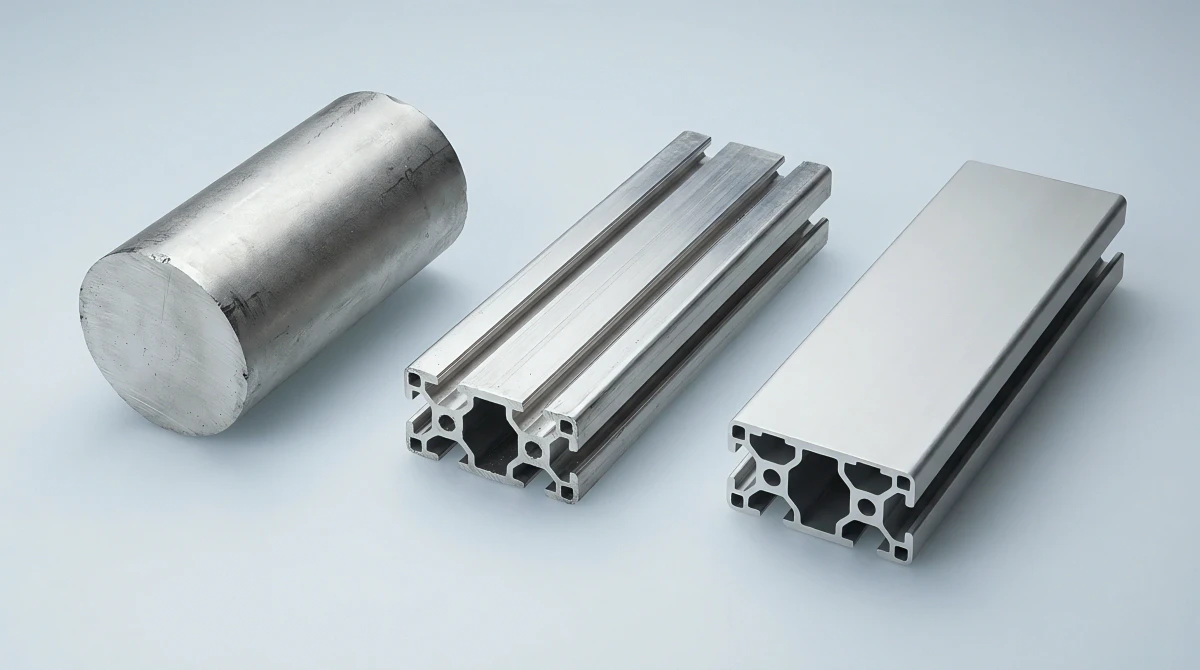
The press pushes a softened billet through a die, and the quench, stretch and oven that follow decide whether the bar is straight and strong.

The Steps of Aluminum Extrusion in the Order the Metal Meets ThemSeven operations turn a cast billet into a profile ready for finishing. A billet is a solid cylinder of cast aluminum, and it never melts on the way.

Straightness, Twist and Flatness Tolerance of Aluminum Extrusions

Form limits scale with length and width, so work them out for the real length before accepting a drawing.

The Straightness Limit and Its FormulaTable 11.6 of Aluminum Standards and Data, in the May 2009 reprint, gives the allowable deviation D from straight in inches. For profiles the limit is a factor multiplied by the measured length in feet, and it applies in total length or in any measured segment of one foot or more of the total length.

ANSI H35.2 Standard Tolerances for Aluminum Extrusions

Name the edition and the class on the drawing, because the standard column governs when nothing is written.

What ANSI H35.2 Covers and How to Cite ItThe title is American National Standard Dimensional Tolerances for Aluminum Mill Products, and the Aluminum Association is its secretariat. Opened for this piece was ANSI H35.2-2017, approved May 12, 2017 as a revision of the 2013 edition, in the December 2017 errata issue.

Send the Section Drawing of Your Profile

Send the 2D drawing and the 3D file, with the quantity and the stage of the project. An engineer replies within 1 working day.

The quote form, the mutual NDA and the private folder for your files are on Protolis Atelier, with Profile Extrusion chosen.

Request a Quote