Meaning
A burr is a small ridge of material left on the edge of a saw cut, a hole or a slot. It forms where the tool pushes soft metal or plastic aside instead of cleanly shearing it. A burr at a cut end sits exactly where the next clamp has to hold the part.How It Forms
A German saw maker’s guide explains the mechanism on aluminum. The tooth deforms the metal and compresses it ahead of the edge before a chip shears off. That leaves an entry burr where the tooth enters and a side burr along the kerf. The exit burr, on the underside where unsupported metal bends away, is the largest and the most troublesome.Read More
Blade and Setup
A dull edge squeezes the metal and raises burr formation, so sharpness comes first. A triple-chip grind, a negative hook and a high tooth count all reduce the push on the wall. Clamping close to the cut on both sides keeps the falling piece from tearing the last of the wall. A thin lubricant film stops aluminum from welding to the carbide.Plastic Cuts
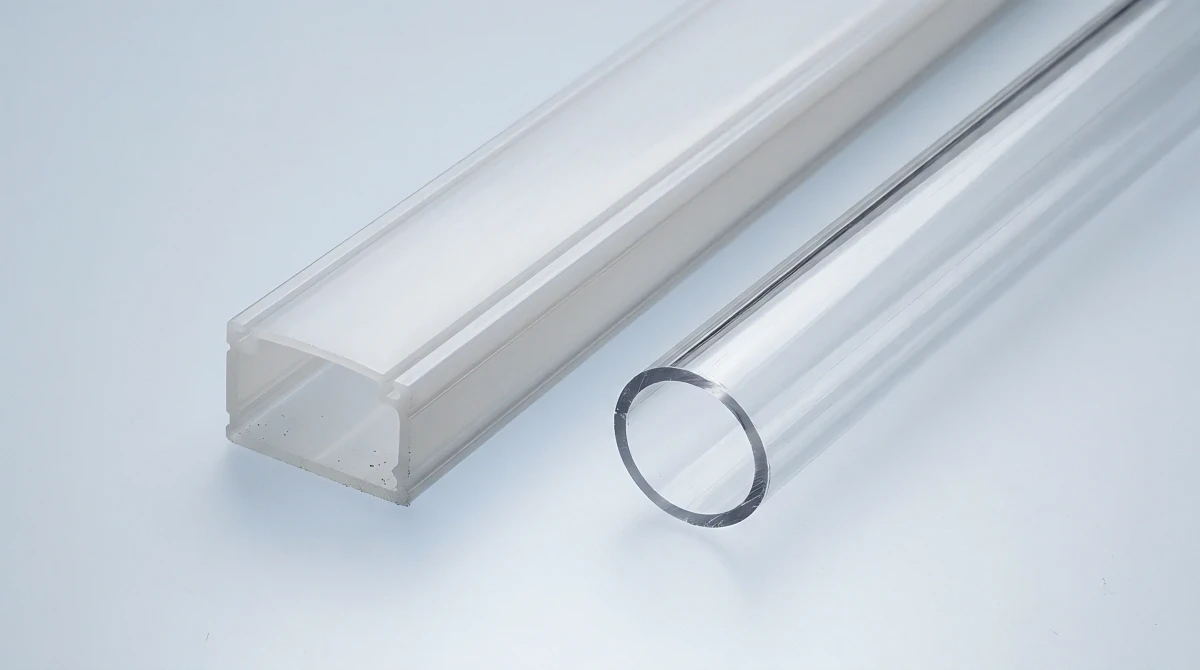
BWF sets two grades for plastic lengths. Its precise lengths have to be free of any visible crack, breakout or burr. Its production lengths may carry small chips and burrs, held to a minimum. A polycarbonate length bound for a bonded joint is therefore ordered as a precise length.Deburring
Deburring follows cutting and comes before drilling or machining in most plans. Moreschi reports a blade change that gave a surface clean enough to drop a downstream grinding and deburring step. Where burrs cannot be avoided, the plan names which edges are deburred and how far.Drawing Limits
The drawing says whether a burr may remain at a cut end, a hole edge or a slot edge. Without that line, sharp edges reach handled or anodized parts. A burr left under a clamp also shifts the next operation.