Modulus of Elasticity

The modulus of elasticity is the stiffness figure on a material sheet, which decides how far a profile deflects under a load below yield.

Every Modulus of Elasticity article of the Profile Extrusion Resources, newest first, each written from published standards, research and makers’ data.

Meaning

The modulus of elasticity is the stiffness figure on a material sheet, which decides how far a profile deflects under a load below yield. For aluminum alloys it barely changes from grade to grade. It is a typical value, not a guaranteed limit.

Aluminum Values

Hydro gives 69 GPa (10.0 Msi) for EN AW-6063 in every temper. EN AW-6082 and EN AW-6005A both list 70 GPa (10.2 Msi). The values are typical at 20 °C (68 °F). The modulus of rigidity, the shear counterpart, is 26 GPa (3.8 Msi) on all three sheets.
Read More

Strength Is Not Stiffness

Changing alloy moves strength far more than stiffness. Going from 6063-T6 to 6082-T6 raises the guaranteed yield by about 47 %. The modulus rises by about 1 GPa. The stronger profile takes more load before it yields, yet bends about as far under any given load.

Design Consequence

A profile limited by deflection gains nothing from a stronger alloy. Stiffness then has to come from the section, and the bending stiffness of a wall rises with the cube of its thickness. Hydro’s sheets list stiffness beside strength, so the two are read separately. A design check uses the modulus for deflection and the limit rows for strength.

Next to Plastics

Plastics sit far lower. Polycarbonate lists a tensile modulus of 2,350 MPa (341 ksi), about a thirtieth of aluminum. Its creep modulus falls to 1,900 MPa (276 ksi) after 1,000 hours under load. A plastic profile in a long-loaded part is judged on that lower figure. For a clip or a clamped lens, stiffness after long loading is what the part actually carries.

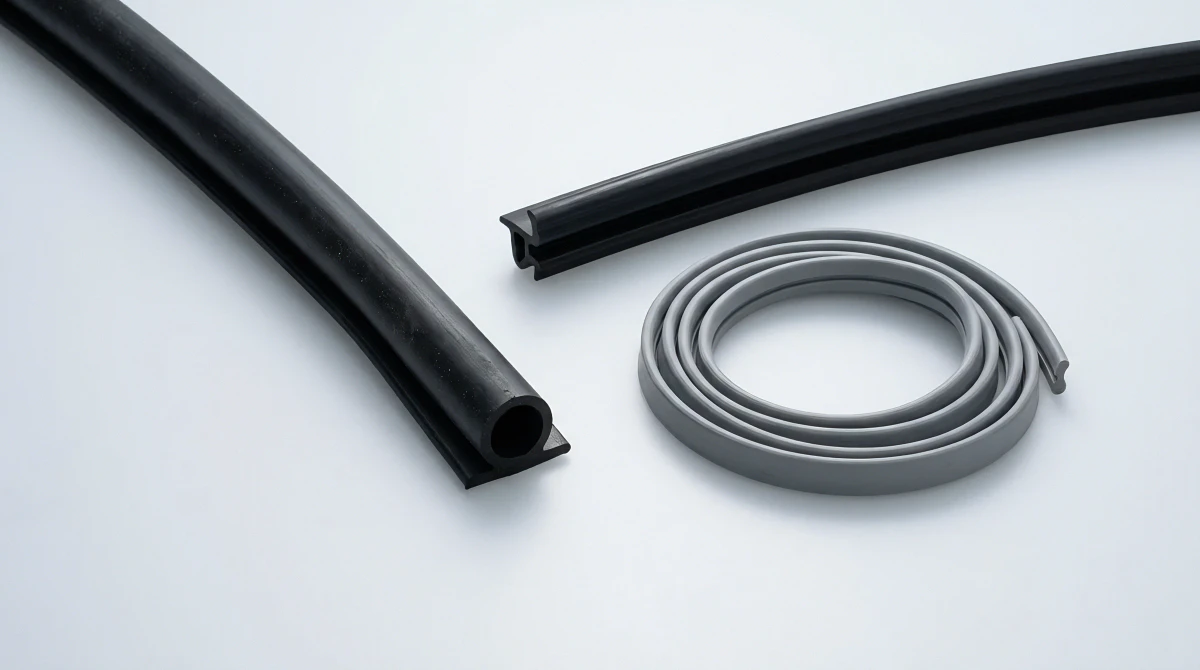
TPE and Flexible PVC for Extruded Seals and Gaskets

Specify a seal compound by hardness, stress at a stated strain and direction, and compression set at service heat, not by hardness alone.

Flexible PVC, TPE-S and TPV for Extruded SealsHEXPOL TPE offers three families for profile extrusion, soft PVC, TPS and TPV, in hardnesses from 20 Shore A to 60 Shore D. Its list of profile uses covers window and door profiles, waterstops, keder profiles, automotive weather seals, train profiles, furniture edges and the door seals of refrigerators and washing machines.

6063 Aluminum Extrusion Properties in T5 and T6

Read the temper, the thickest wall and the word minimum before trusting any strength figure for this alloy.

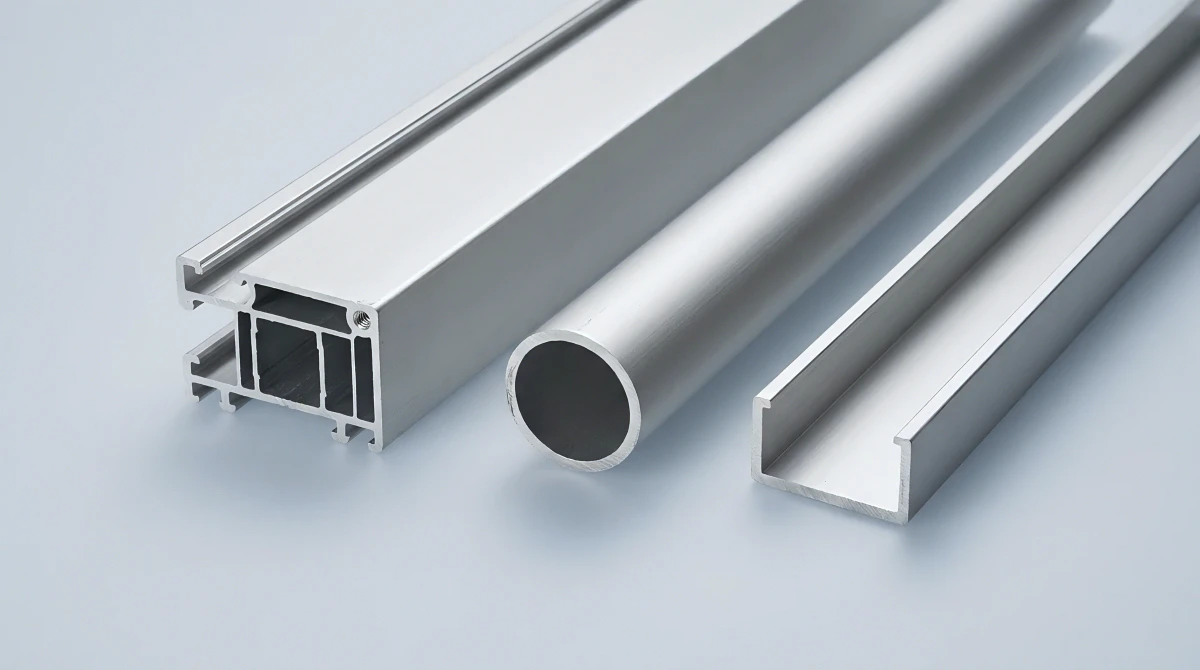
What EN AW-6063 Guarantees in T4, T5, T6 and T66Hydro's datasheet for EN AW-6063 (alloy designation AlMg0.7Si) lists minimum mechanical properties taken from EN 755-2:2016 for extruded profile. The values are minimums, and each row is tied to a wall thickness band.

Send the Section Drawing of Your Profile

Send the 2D drawing and the 3D file, with the quantity and the stage of the project. An engineer replies within 1 working day.

The quote form, the mutual NDA and the private folder for your files are on Protolis Atelier, with Profile Extrusion chosen.

Request a Quote