Billet Weight

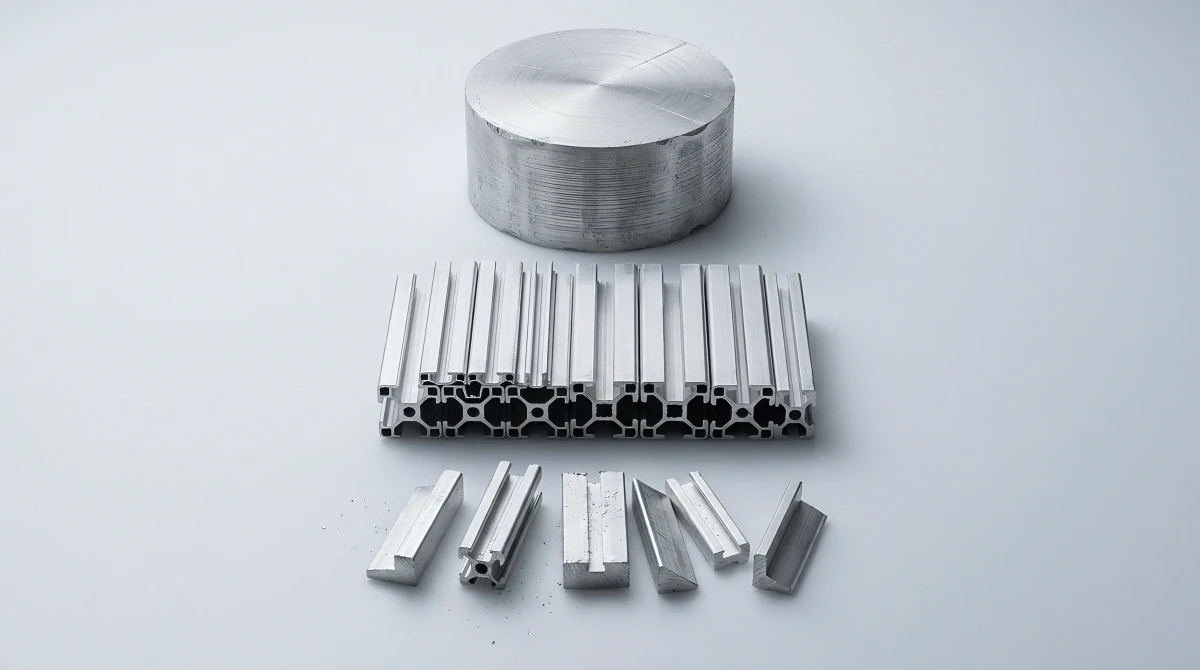
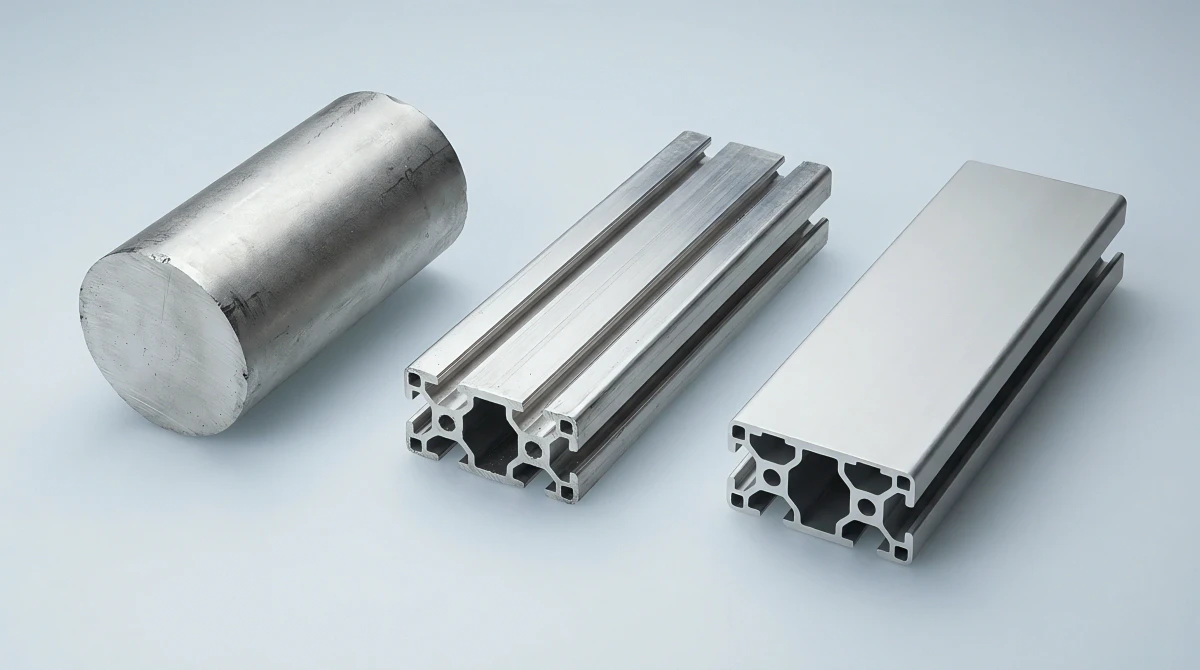
Billet weight is the mass of the cast aluminum log loaded for one push, and it sets how much profile that push gives.

Every Billet Weight article of the Profile Extrusion Resources, newest first, each written from published standards, research and makers’ data.

Meaning

Billet weight is the mass of the cast aluminum log loaded for one push, and it sets how much profile that push gives. Extruders quote order minimums and setup in billet terms. A buyer converts an order into billets to see how a small quantity sits against those minimums.

Worked Example

One article works through an assumed billet of 178 mm (7 in) diameter and 700 mm (27.6 in) length. At 2.70 g/cm³ it weighs about 47.0 kg (104 lb). After the butt, the crushed ends and 6 % rejects, it ships 36 to 38 kg (79 to 84 lb) of profile. That is 77 to 80 % of the billet, before any welding of billets into one length.
Read More

Butt Share

A share of every billet stays at the die. Light Metal Age gives a usual allowance of 12 to 14 % of billet weight for the butt. That keeps the oxide-rich skin and coring out of the profile. A longer billet also leaves a longer butt, so length alone does not raise the yield.

Billets per Order

Dividing an order weight by the metal shipped per billet gives a first count. With the example’s 37.8 kg per billet, a 227 kg (500 lb) batch takes 7 billets. A 454 kg (1,000 lb) order takes 13, and 907 kg (2,000 lb) takes 25. One extruder’s setup charge for a changeover also scales with billet volume.

Billet Shape

Older containers took billets about five diameters long. Newer, longer containers take up to eight diameters. Light Metal Age compared two billets of similar weight. One measured 203 by 1,422 mm (8 by 56 in), the other 254 by 909 mm (10 by 35.8 in). Press load and die temperature came out nearly identical.

Die Life Basis

The AEC die life table counts metal in pounds without saying whether that means billet or profile weight. Shares of die life worked from it are therefore rough. The two differ by the butt and the end losses.
Aluminum Extrusion Die Life in Kilograms Before the Bearing Wears

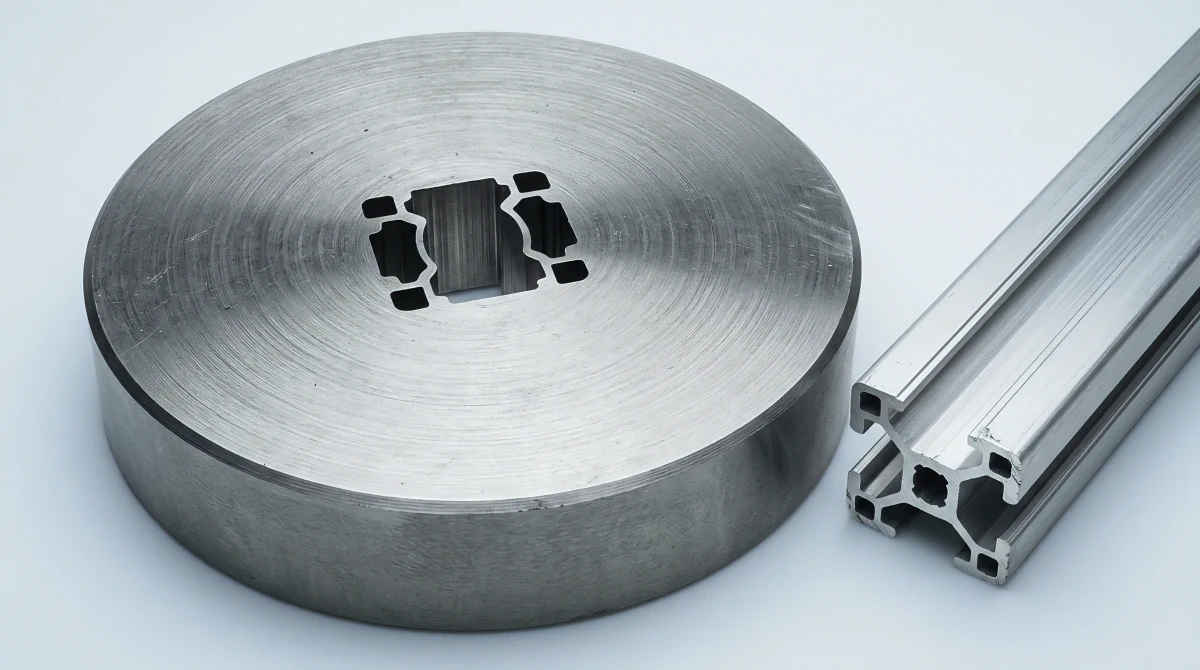
Die life is counted in tonnes of aluminum before the bearing wears, so a bridge run usually needs one die and a plan for its trial and correction.

What Wears an Extrusion Die and How FastThe AEC manual explains that the life of an extrusion die is generally set by wear of the bearing, the surface of the die opening at right angles to the die face that controls metal flow and velocity by friction. Because the bearing determines the control and finish of the profile, any deterioration, given the finish required, leads to premature failure of the die.

How Much of an Aluminum Billet Becomes Shipped Profile

Order weight, butt, stretcher ends and rejects decide how many billets a small aluminum extrusion run takes and what the buyer receives.

The Yield Stack From Billet to Shipped LengthA billet is heated, pushed through a die, quenched, stretched, sawn and aged. Metal leaves the stream at three points, and each has a figure in the published sources.

Aluminum Extrusion Process From Billet to Aged Profile

The press pushes a softened billet through a die, and the quench, stretch and oven that follow decide whether the bar is straight and strong.

The Steps of Aluminum Extrusion in the Order the Metal Meets ThemSeven operations turn a cast billet into a profile ready for finishing. A billet is a solid cylinder of cast aluminum, and it never melts on the way.

Send the Section Drawing of Your Profile

Send the 2D drawing and the 3D file, with the quantity and the stage of the project. An engineer replies within 1 working day.

The quote form, the mutual NDA and the private folder for your files are on Protolis Atelier, with Profile Extrusion chosen.

Request a Quote