Aluminum Extruders Council

The Aluminum Extruders Council (AEC) is the trade association of aluminum extruders, publishing practical guides on extrusion process, design and tolerances.

Every Aluminum Extruders Council article of the Profile Extrusion Resources, newest first, each written from published standards, research and makers’ data.

Meaning

The Aluminum Extruders Council (AEC) is the trade association of aluminum extruders, publishing practical guides on extrusion process, design and tolerances. Several articles in these resources draw their die, process and design figures from it. Its documents speak for the industry’s practice, while the Aluminum Association writes the standards.

The Manual

The Aluminum Extrusion Manual, 4th edition of 2013, gathers die, process and tolerance practice. Its die life table counts tonnes before the bearing wears, with and without nitriding. Its process section names four ways to quench a profile, from air and mist to water spray and a full water bath. It warns that exit temperatures are read at the platen and that the die exit runs significantly hotter. It also advises a stress-relieved temper for parts that will be machined to close limits.
Read More

Tolerance Guidance

The AEC’s tolerance page points to Aluminum Standards and Data for standard and precision tables. It adds that many extruders can work closer than those tables. The tolerance for a particular part is then a discussion between designer and extruder. The manual’s tolerance section restates Rule #1 of geometric dimensioning: a size tolerance also limits form.

White Paper

A 2019 AEC white paper addresses buyers weighing custom extrusions. It states that most extruders set a minimum order, often 454 to 907 kg (1,000 to 2,000 lb) per shape. A smaller press can accept a smaller order, since its billets and tools are smaller too. The paper gives 2 to 3 weeks for a new die. For design, it advises a tongue ratio below about 3, no sharp corners and symmetry where possible.

Process Basics

The AEC process page describes the billet entering the press above 375 °C (707 °F), up to 500 °C (932 °F) by alloy. It names the upset, in which the billet shortens and widens to fill the container. For hollows, the metal divides around a mandrel and rejoins before the bearing.
EN 755-9 and EN 12020-2 Scope and Editions for Aluminum Extruded Profiles

Name EN 755-9 or EN 12020-2 with its year, because scope, alloys and limits differ by standard and edition.

What EN 755-9 and EN 12020-2 Each CoverEN 755-9 is part 9 of the EN 755 series for extruded rod and bar, tube and profiles. BSI describes BS EN 755-9:2016 as specifying the tolerances on dimensions and form for aluminum and aluminum alloy profiles with a cross-section contained within a circumscribing circle not greater than 800 mm.

Aluminum Extrusion Die Life in Kilograms Before the Bearing Wears

Die life is counted in tonnes of aluminum before the bearing wears, so a bridge run usually needs one die and a plan for its trial and correction.

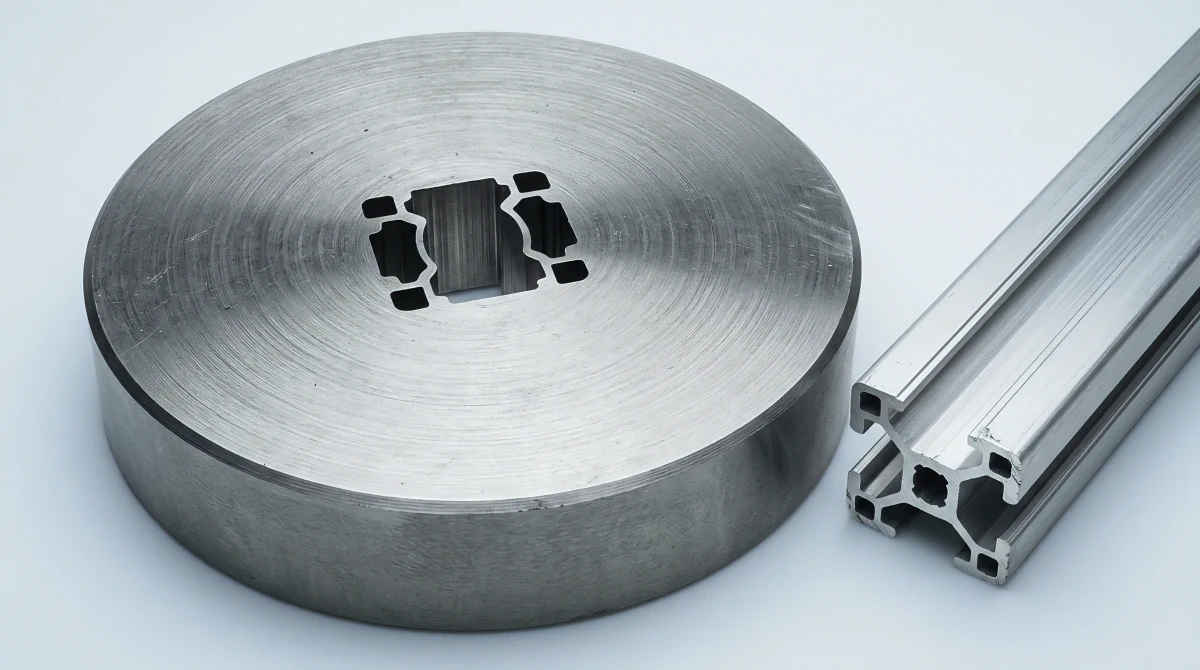
What Wears an Extrusion Die and How FastThe AEC manual explains that the life of an extrusion die is generally set by wear of the bearing, the surface of the die opening at right angles to the die face that controls metal flow and velocity by friction. Because the bearing determines the control and finish of the profile, any deterioration, given the finish required, leads to premature failure of the die.

Aluminum Extrusion Process From Billet to Aged Profile

The press pushes a softened billet through a die, and the quench, stretch and oven that follow decide whether the bar is straight and strong.

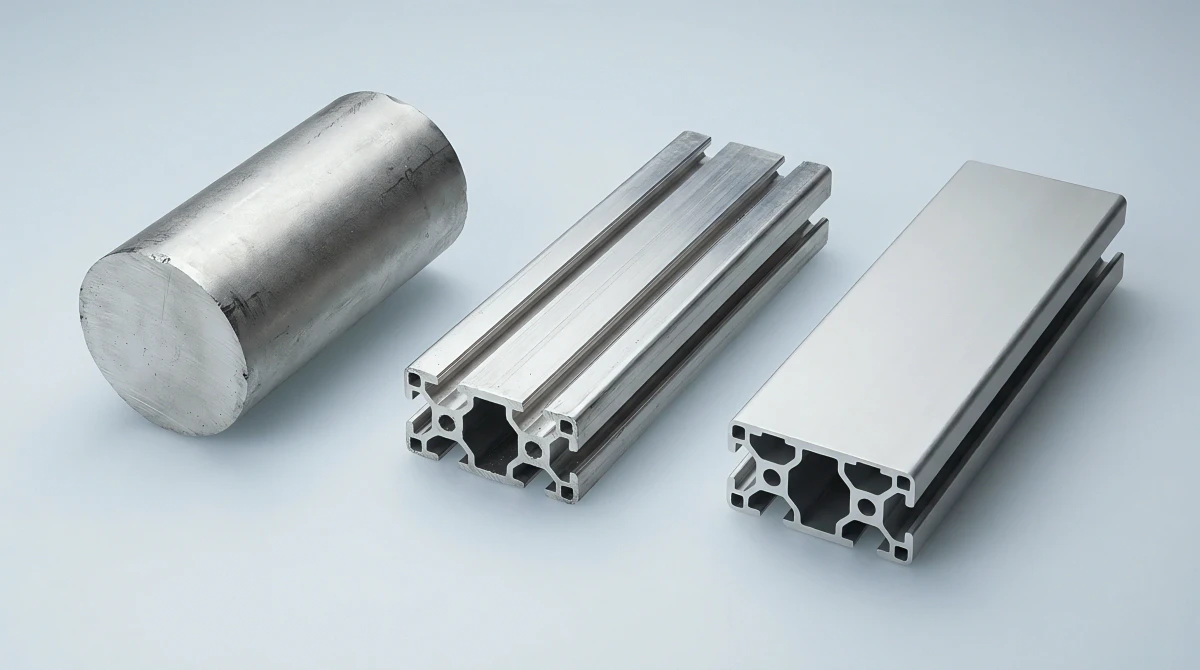
The Steps of Aluminum Extrusion in the Order the Metal Meets ThemSeven operations turn a cast billet into a profile ready for finishing. A billet is a solid cylinder of cast aluminum, and it never melts on the way.

Cut Length and Saw Cut Tolerance of Extruded Profiles

A length tolerance belongs to a cutting step and a measuring method, so name both with the number.

Saw Tolerances for Plastic Profile LengthsBWF's guidelines of 20 November 2024 give saw tolerances for polycarbonate and PMMA profiles in two cases, offline cut and inline cut. Each is tabulated against the length, in millimeters, and each is tied to a method: lengths up to 4,500 mm are measured on a measuring table that checks length and angle, and longer ones with a measuring tape.

Straightness, Twist and Flatness Tolerance of Aluminum Extrusions

Form limits scale with length and width, so work them out for the real length before accepting a drawing.

The Straightness Limit and Its FormulaTable 11.6 of Aluminum Standards and Data, in the May 2009 reprint, gives the allowable deviation D from straight in inches. For profiles the limit is a factor multiplied by the measured length in feet, and it applies in total length or in any measured segment of one foot or more of the total length.

Send the Section Drawing of Your Profile

Send the 2D drawing and the 3D file, with the quantity and the stage of the project. An engineer replies within 1 working day.

The quote form, the mutual NDA and the private folder for your files are on Protolis Atelier, with Profile Extrusion chosen.

Request a Quote