Meaning
The cooling rate is how fast an extruded profile loses heat after leaving the die. In aluminum it decides whether the alloy can reach its aged strength. In plastic it decides size, shrinkage and locked-in stress. Too fast and too slow both have costs.Aluminum Quench
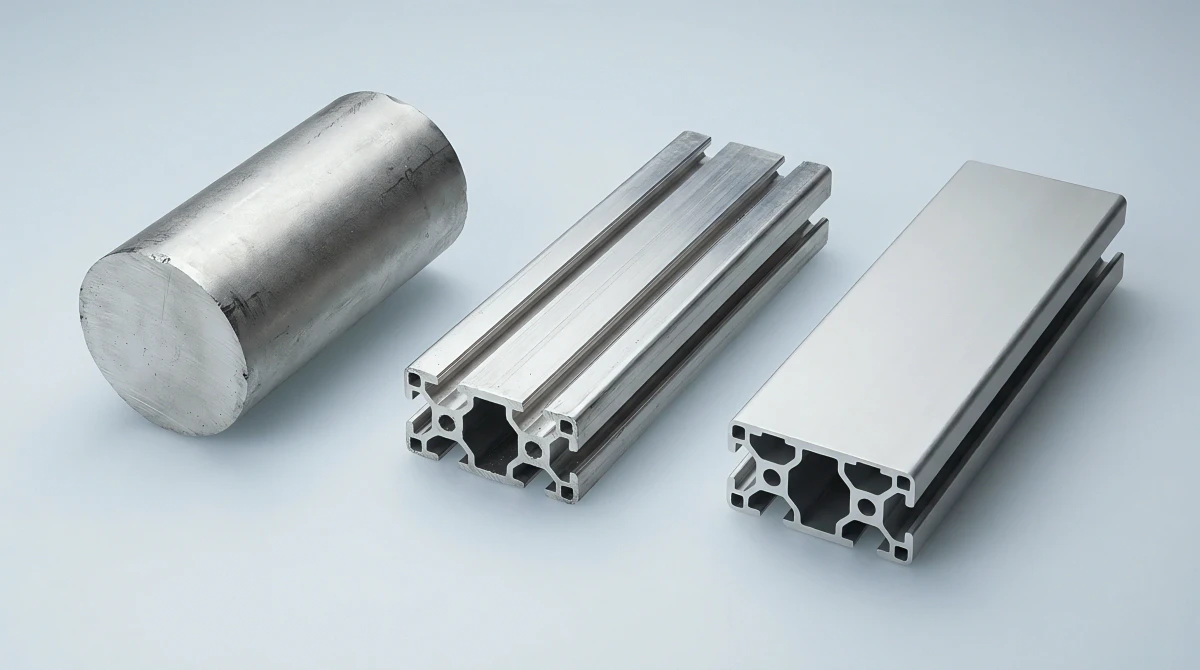
The quench on the run-out table keeps the alloying elements dissolved until the aging oven. Cooling that is too slow or uneven shows later as low hardness after aging, or as distortion toward the cooled side. A University of Illinois thesis notes high-pressure sprays for hard-to-cool shapes. They reach the rate the alloy needs while limiting distortion.Read More
Plastic Sizing
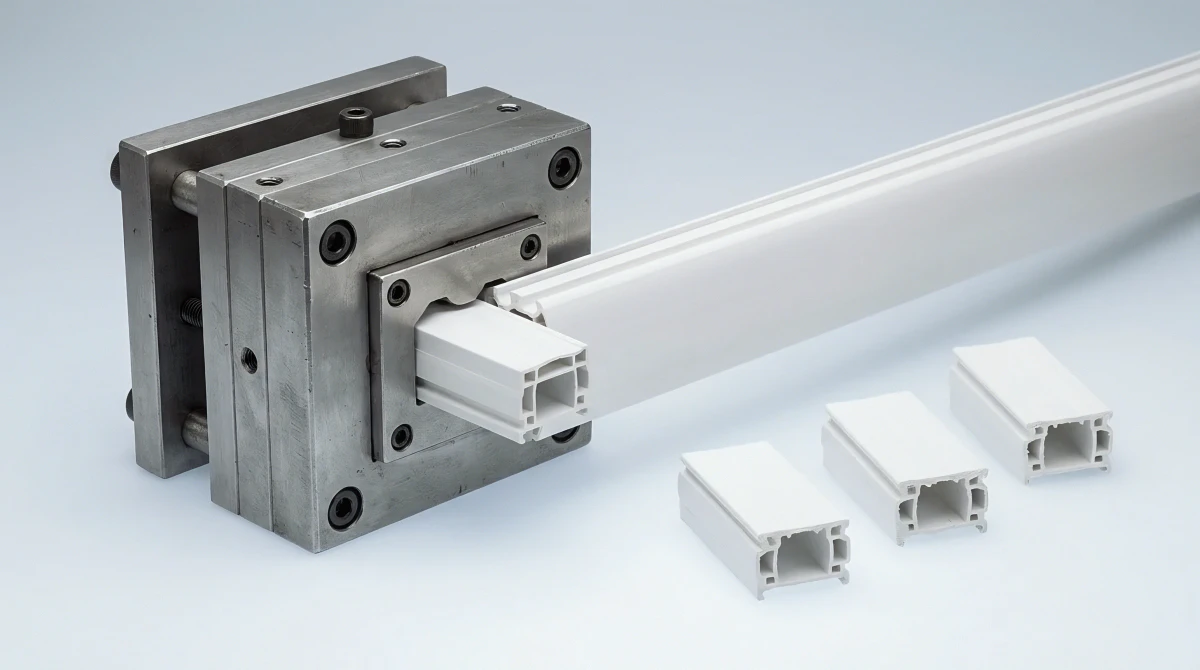
Newey lists a controlled cooling rate as one of three conditions for dimensional control, with melt rate and draw-off speed. A profile cooled too weakly keeps drawing down past the point the die designer expected. It then ends smaller than intended. Shock cooling, by contrast, can make the profile brittle.Chiller Capacity
Most plastic lines run on recirculating water with a chiller, because the heat has to be removed continuously. When chiller capacity runs short, the cooling rate wanders over a shift. That shows up as size drift. Certain engineering thermoplastics are cooled slowly on purpose, in water or oil heated calibrators.Fault Signs
A rigid vinyl guide pairs excessive thermal shrinkage with high residual stress. Its remedies include less drawdown and a lower cooling rate. Warping points to uneven cooling, with one side keeping its heat. The guide’s correction is to adjust cooling or warm the cooler side.