Thermoplastic

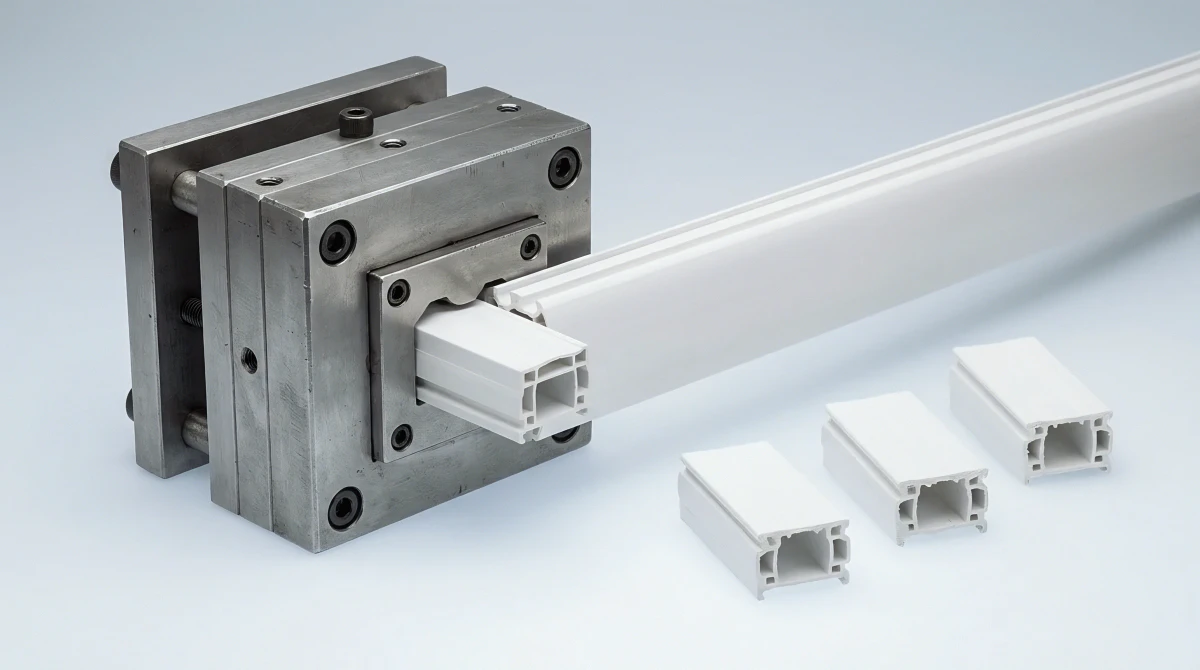
A thermoplastic is a plastic that is melted for extrusion and freezes into shape as it cools, the material of every extruded plastic profile.

Every Thermoplastic article of the Profile Extrusion Resources, newest first, each written from published standards, research and makers’ data.

Meaning

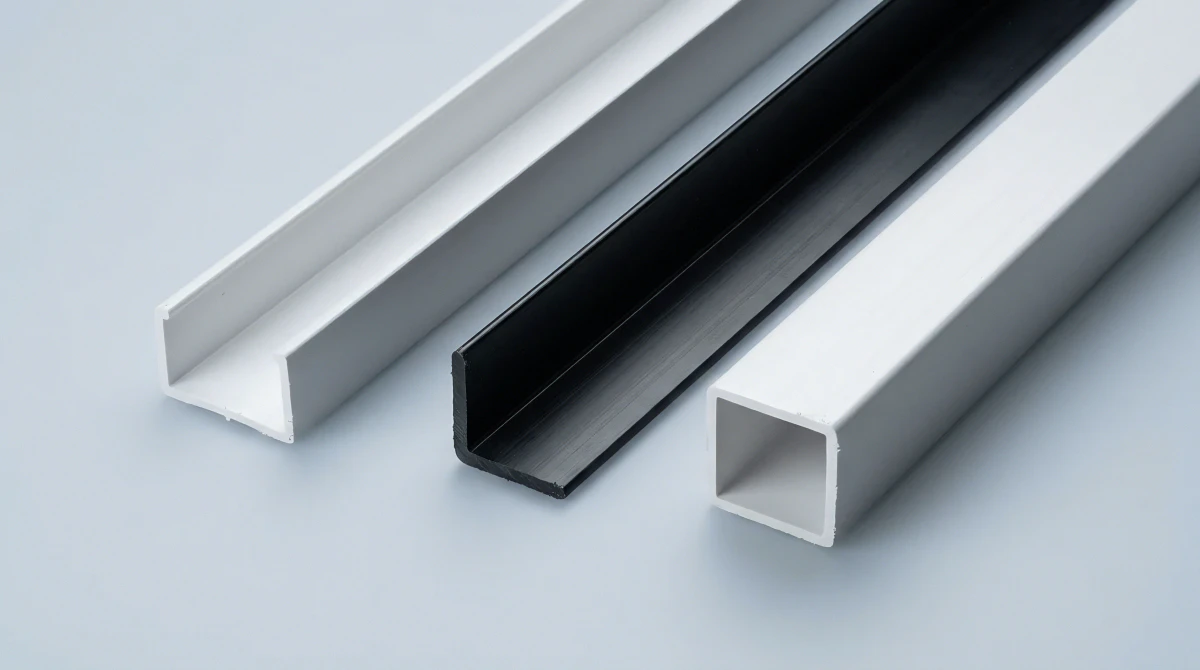
A thermoplastic is a plastic that is melted for extrusion and freezes into shape as it cools, the material of every extruded plastic profile. Rigid and flexible PVC, polycarbonate, PMMA, PP and ABS are examples named in the sources. Each one behaves differently in the die and the sizer.

Standard Scope

DIN 16941 is written for extruded profiles of thermoplastics. Its full title covers general tolerances of size, form and orientation. It was prepared by a DIN working committee on semi-finished thermoplastic products. Profiles in other materials fall outside it.
Read More

Crystalline and Amorphous

Plastics Technology sorts thermoplastics by the point at which they stop drawing down. For crystalline polymers it names the glass transition, and for amorphous ones the heat distortion temperature. PP and LDPE, crystalline and high in specific heat, are drawn down further than amorphous rigid PVC.

One Behavior Each

Every thermoplastic carries its own specific heat and with it its own drawdown ratio. That is why a die made for one does not run another. Swell at the die also differs by material and even by lot. A die, a sizer and a puller setting are therefore proved again for each material.

Cooling Needs

Some engineering thermoplastics need slower cooling to develop their properties. Calibrators warmed with water or oil serve them, in Newey’s account. Shock cooling can make others brittle. Hygroscopic thermoplastics are dried before they reach the screw.

Tolerance Basis

Thermoplastic profiles move more with temperature than metal ones. BWF quotes its lengths at 20 °C (68 °F) and 30 % relative humidity for that reason. Its general limits for a 40 mm width run at about twice the aluminum figure.

TPE and Flexible PVC for Extruded Seals and Gaskets

Specify a seal compound by hardness, stress at a stated strain and direction, and compression set at service heat, not by hardness alone.

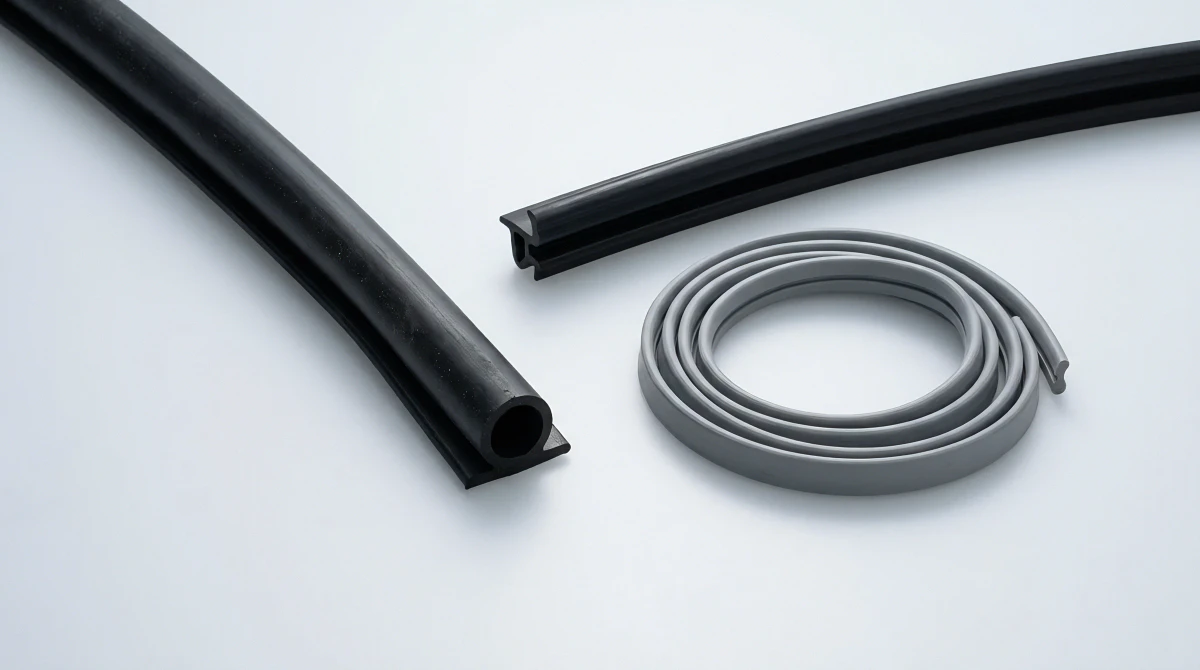
Flexible PVC, TPE-S and TPV for Extruded SealsHEXPOL TPE offers three families for profile extrusion, soft PVC, TPS and TPV, in hardnesses from 20 Shore A to 60 Shore D. Its list of profile uses covers window and door profiles, waterstops, keder profiles, automotive weather seals, train profiles, furniture edges and the door seals of refrigerators and washing machines.
Rigid PVC Compounds for Extruded Profiles

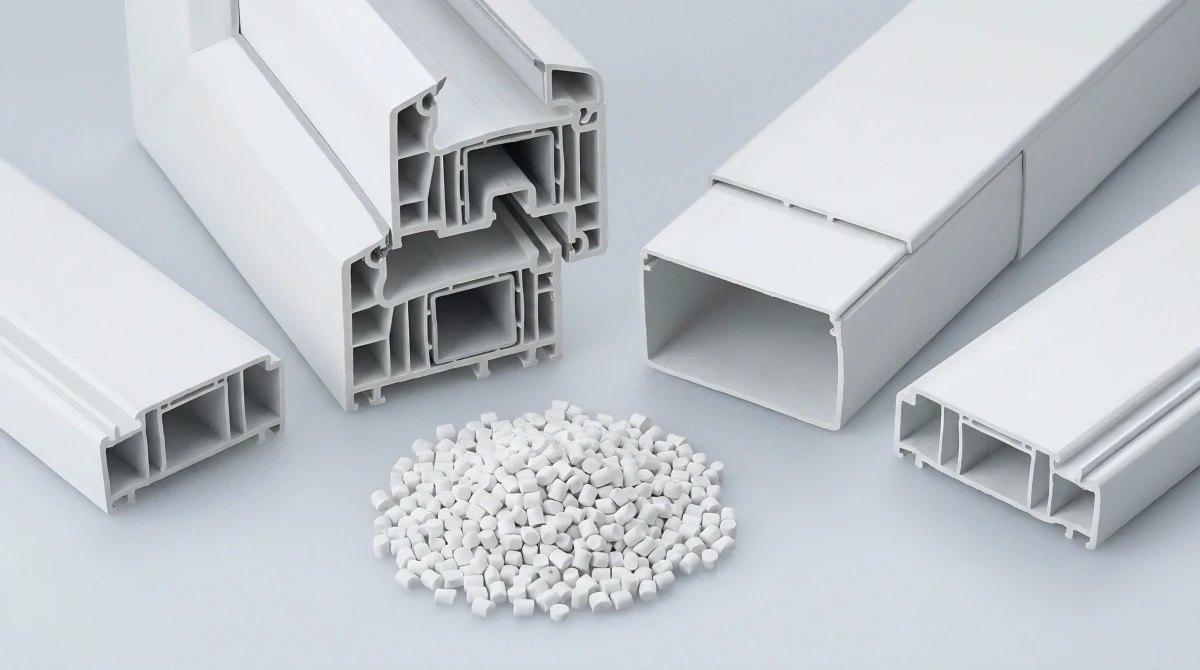
Rigid PVC profiles are stiff and easy to extrude, but their glass transition sets the heat limit, so name service temperature and color with the compound.

What a Rigid PVC Extrusion Compound ContainsRigid PVC, also written PVC-U for unplasticized, is polyvinyl chloride without plasticizer. It is never extruded as bare resin.

Planning a Plastic Profile Extrusion Run From Die Trial to Regrind

A plastic profile run is a tooling set tied to one resin, a trial that makes scrap, and steady hours that arithmetic on kilograms per hour can size.

What a Plastic Profile Run Is Made OfFour parts make a run: the tooling set, the start-up, the steady production and the changeover at the end. Each has its own tool, its own time and its own scrap, and a buyer who plans a quantity needs to ask about all four.

Plastic Profile Extrusion Line From Die Lip to Cut Length

A profile die only suggests the shape, and the sizer, puller and saw that follow have to hold the size until the plastic is solid.

The Stations of a Plastic Profile Line From Hopper to SawA typical line has five parts: an extruder, a die with its adapter, sizing and cooling equipment, a puller, and a way to cut the profile to length. The same five appear in a rigid vinyl guide from a PVC compound maker.

DIN 16941 General Tolerances for Extruded Plastic Profiles

Cite the edition and the series on the drawing, then add what the general tolerances leave open.

What DIN 16941 CoversThe current edition is DIN 16941:2012-11, titled Thermoplastics extruded profiles, General tolerances of size, form and orientation, with the German title Extrudierte Profile aus thermoplastischen Kunststoffen, Allgemeintoleranzen für Maße, Form und Lage. It is published in German, with an English translation sold separately, and it replaces DIN 16941:1986-05.

Send the Section Drawing of Your Profile

Send the 2D drawing and the 3D file, with the quantity and the stage of the project. An engineer replies within 1 working day.

The quote form, the mutual NDA and the private folder for your files are on Protolis Atelier, with Profile Extrusion chosen.

Request a Quote