PVC

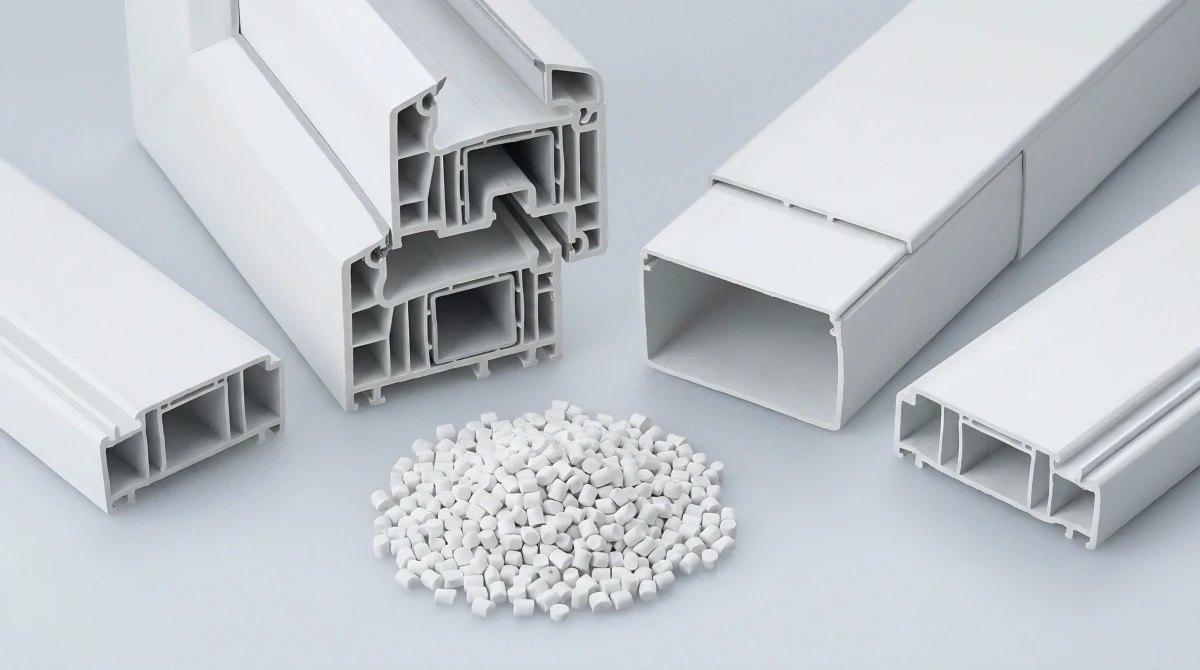
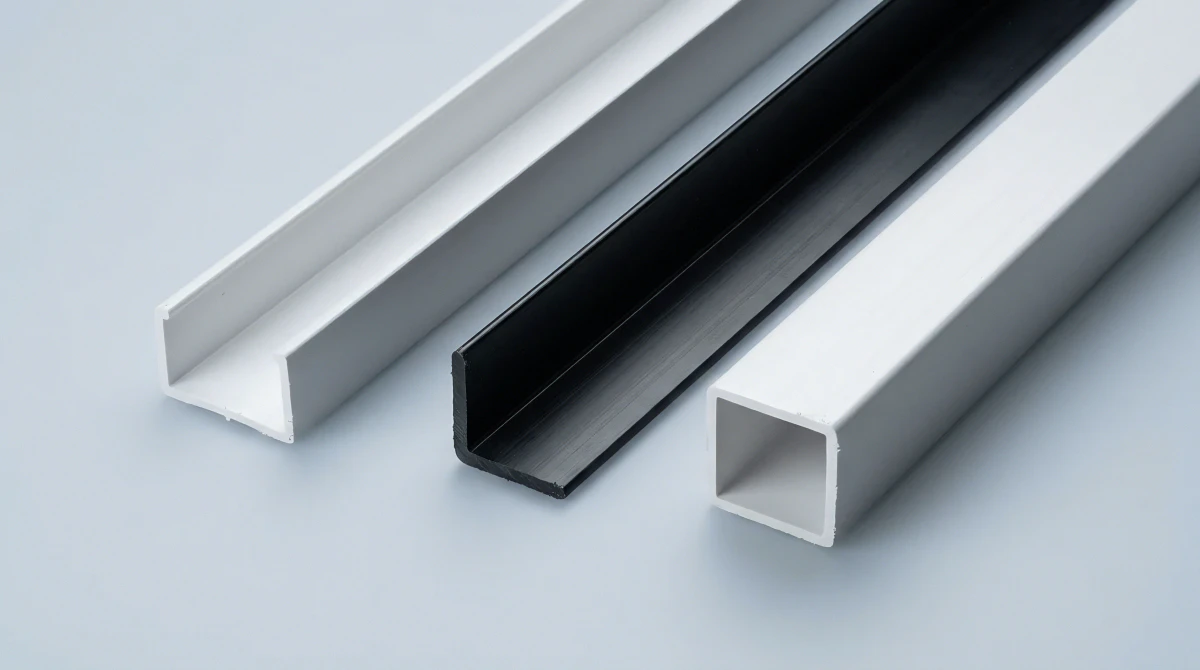
PVC, polyvinyl chloride, is the most common profile extrusion polymer, used rigid for frames and ducts and flexible for seals, always as a compound with stabilizers and other ingredients.

Every PVC article of the Profile Extrusion Resources, newest first, each written from published standards, research and makers’ data.

Meaning

PVC, polyvinyl chloride, is the most common profile extrusion polymer, used rigid for frames and ducts and flexible for seals, always as a compound with stabilizers and other ingredients.

Rigid and Flexible

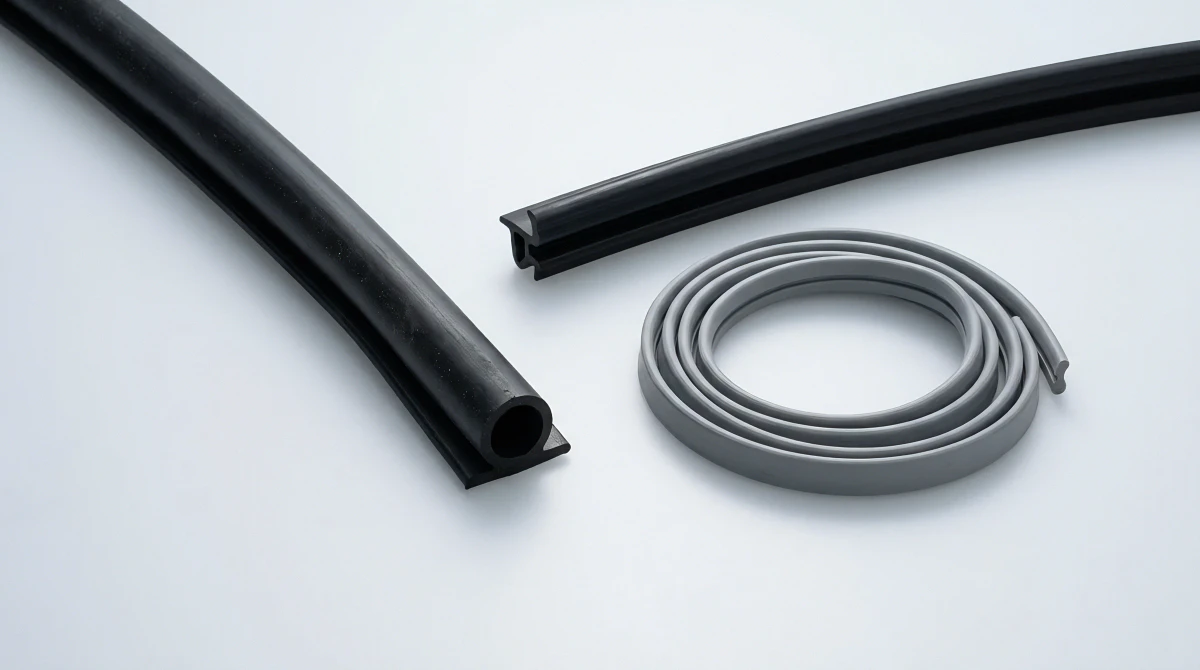
Rigid PVC, or PVC-U, contains no plasticizer; NETZSCH gives it a glass transition of 80 to 90 °C (176 to 194 °F) and a modulus of 2,700 to 3,000 MPa (392 to 435 ksi). Flexible or soft PVC serves seals and gaskets, and Teknor Apex’s Apex 2310UV2 and 2316UV2 compounds come at 60 to 80 Shore A for co-extrusion onto rigid vinyl.
Read More

Compound

GEON describes its compounds as PVC resin with thermal stabilizers, lubricants, impact modifiers and pigments, supplied as cubes, pellets or dry blend. ASTM D1784 classifies rigid PVC and CPVC compounds by base resin, notched impact, tensile strength, modulus, deflection temperature and flammability.

Processing Cautions

PVC forms hydrochloric acid when it decomposes, so dies and barrels are corrosion resistant, aluminum, brass and copper dies are avoided, and dies are neutralized after a run. A PVC die is purged and cleaned at changeover.

Contact With Other Plastics

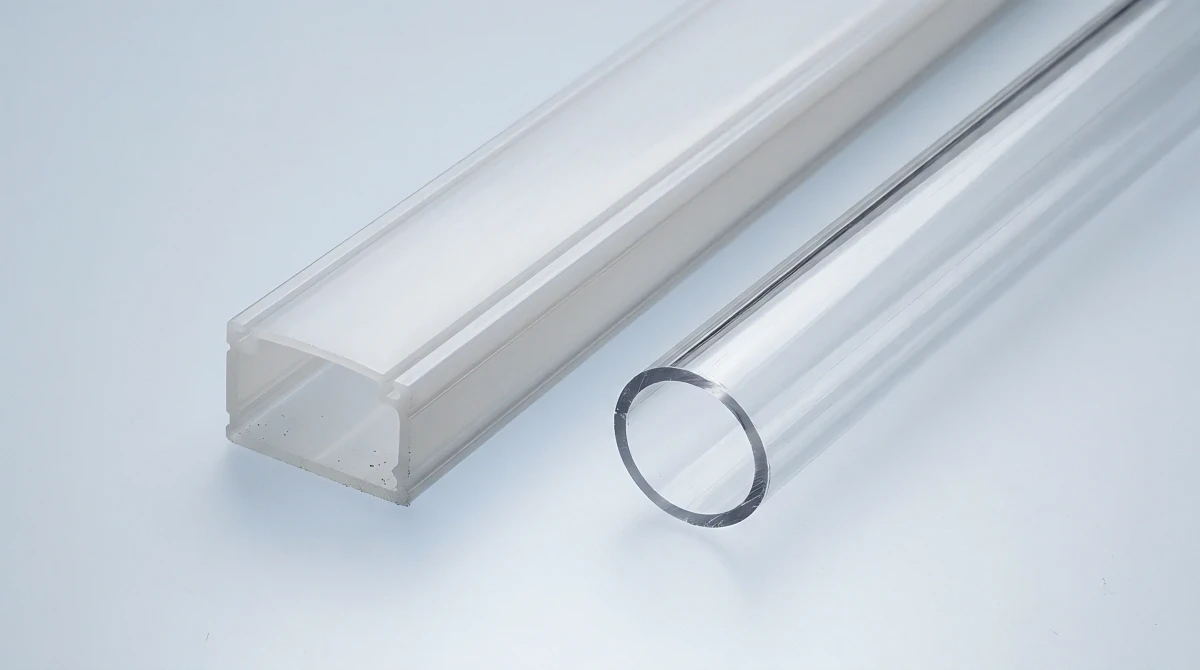
BWF warns that soft PVC in contact with polycarbonate or PMMA profiles can harm them.

Standards

ASTM D3678 covers rigid PVC interior profiles in three classes and ASTM D4726 exterior profiles for windows and doors.

Heat Limits

Rigid PVC softens near its glass transition. BASF lists a Vicat temperature of 81 °C (178 °F), and post-shrinkage begins once the material has been heated above 60 °C (140 °F). NETZSCH places the first stage of decomposition at 285 to 315 °C (545 to 599 °F), with hydrochloric acid formed.
TPE and Flexible PVC for Extruded Seals and Gaskets

Specify a seal compound by hardness, stress at a stated strain and direction, and compression set at service heat, not by hardness alone.

Flexible PVC, TPE-S and TPV for Extruded SealsHEXPOL TPE offers three families for profile extrusion, soft PVC, TPS and TPV, in hardnesses from 20 Shore A to 60 Shore D. Its list of profile uses covers window and door profiles, waterstops, keder profiles, automotive weather seals, train profiles, furniture edges and the door seals of refrigerators and washing machines.

Rigid PVC Compounds for Extruded Profiles

Rigid PVC profiles are stiff and easy to extrude, but their glass transition sets the heat limit, so name service temperature and color with the compound.

What a Rigid PVC Extrusion Compound ContainsRigid PVC, also written PVC-U for unplasticized, is polyvinyl chloride without plasticizer. It is never extruded as bare resin.

Planning a Plastic Profile Extrusion Run From Die Trial to Regrind

A plastic profile run is a tooling set tied to one resin, a trial that makes scrap, and steady hours that arithmetic on kilograms per hour can size.

What a Plastic Profile Run Is Made OfFour parts make a run: the tooling set, the start-up, the steady production and the changeover at the end. Each has its own tool, its own time and its own scrap, and a buyer who plans a quantity needs to ask about all four.

Plastic Profile Extrusion Line From Die Lip to Cut Length

A profile die only suggests the shape, and the sizer, puller and saw that follow have to hold the size until the plastic is solid.

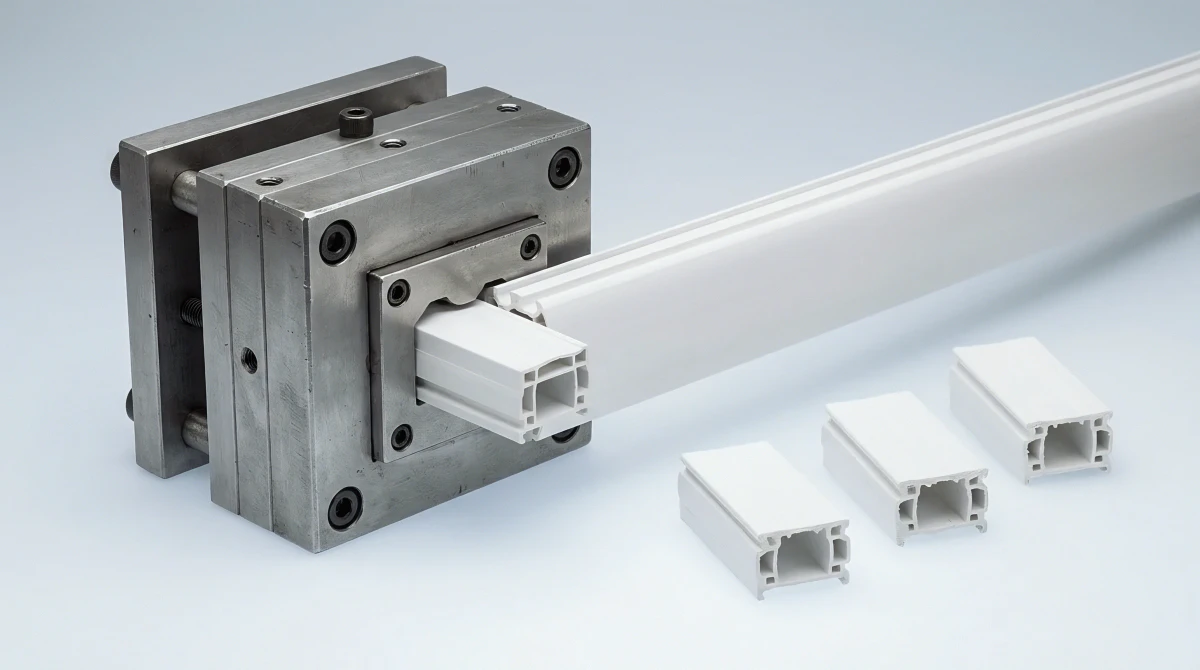
The Stations of a Plastic Profile Line From Hopper to SawA typical line has five parts: an extruder, a die with its adapter, sizing and cooling equipment, a puller, and a way to cut the profile to length. The same five appear in a rigid vinyl guide from a PVC compound maker.

Cutting and Machining Extruded Aluminum Lengths

A press saw makes bars into shippable lengths, and a precision saw with the right blade, clamps and datums makes the length the drawing asks for.

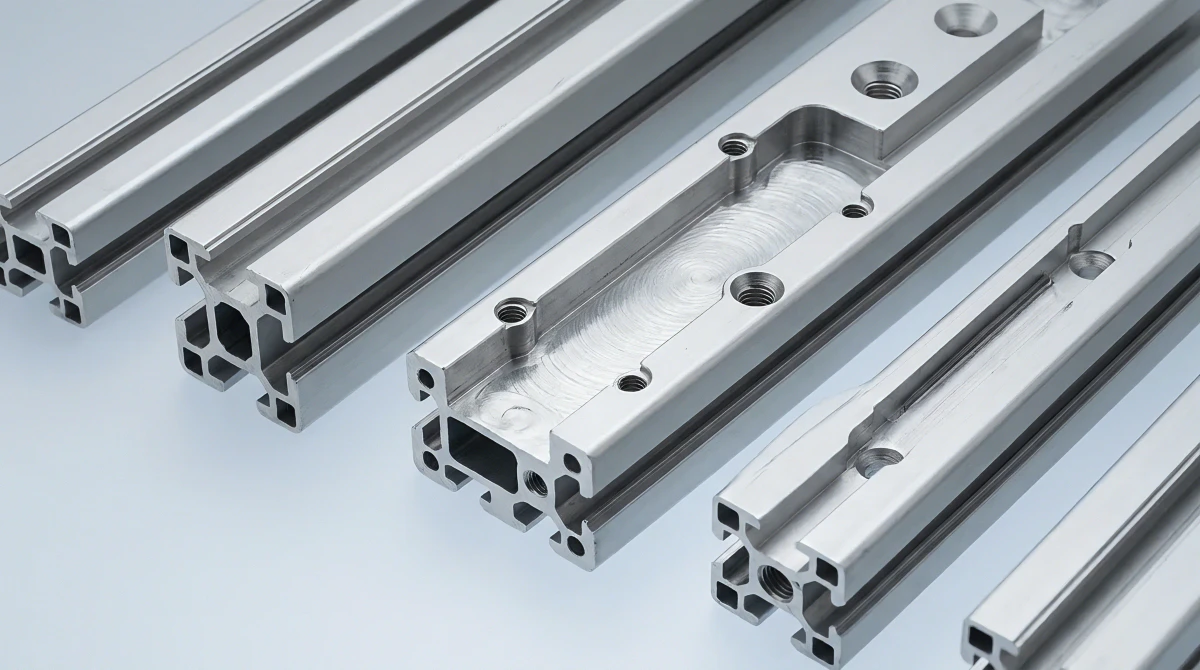
The Order of Operations From Bar to Cut LengthCutting comes first in almost any fabrication plan, with deburring and then drilling, punching or machining after it. A burr left from the cut sits where the clamp has to hold the piece for the next step, so the order carries weight.

DIN 16941 General Tolerances for Extruded Plastic Profiles

Cite the edition and the series on the drawing, then add what the general tolerances leave open.

What DIN 16941 CoversThe current edition is DIN 16941:2012-11, titled Thermoplastics extruded profiles, General tolerances of size, form and orientation, with the German title Extrudierte Profile aus thermoplastischen Kunststoffen, Allgemeintoleranzen für Maße, Form und Lage. It is published in German, with an English translation sold separately, and it replaces DIN 16941:1986-05.

Polycarbonate Extruded Profile Properties and What the Datasheet Leaves Out

Read the resin sheet for viscosity, heat and growth, then ask what it leaves out about the profile itself.

What a Polycarbonate Datasheet States for Profile GradesTwo documents are read side by side here. SABIC's datasheet for LEXAN 135 resin describes the highest-viscosity linear polycarbonate powder in its range, and it names profile extrusion as the processing method.

Send the Section Drawing of Your Profile

Send the 2D drawing and the 3D file, with the quantity and the stage of the project. An engineer replies within 1 working day.

The quote form, the mutual NDA and the private folder for your files are on Protolis Atelier, with Profile Extrusion chosen.

Request a Quote