Meaning
Residual stress is stress that stays locked inside an extruded section after it cools, with no outside load acting on it. It comes from uneven cooling and from the way the material is drawn or quenched. It shows later, when the profile is cut, machined, bonded or heated and the stress finds a new balance.Aluminum Source
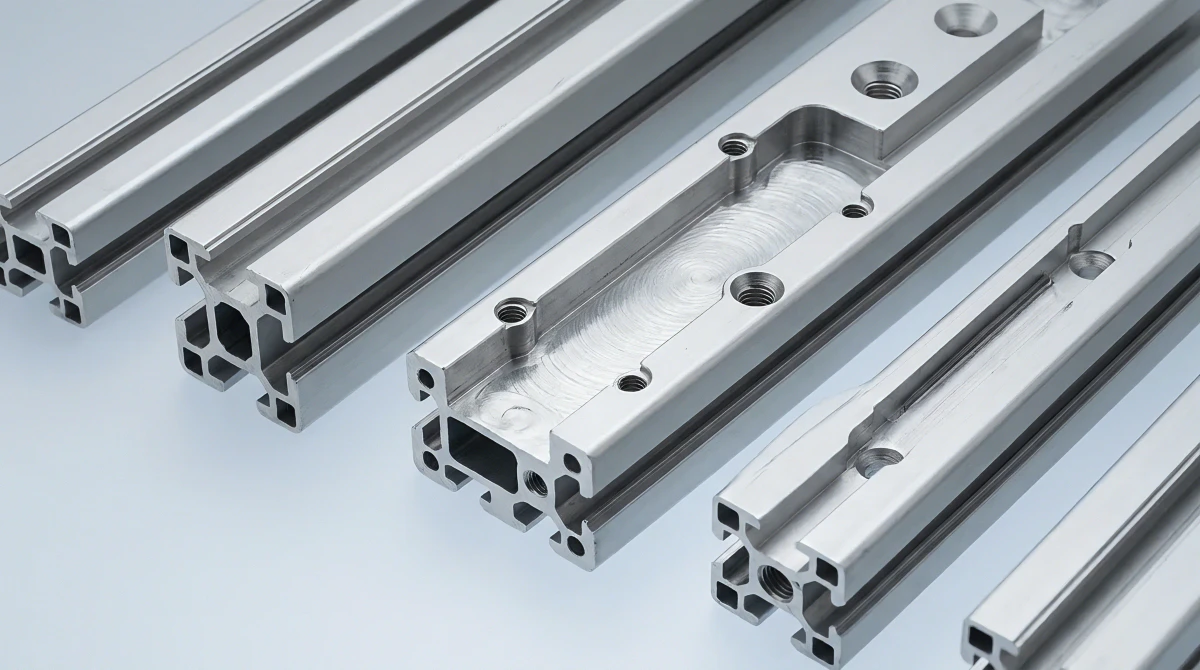
The quench on the run-out table leaves an aluminum bar with distortion and residual stress. The stretcher then pulls the bar by 1 to 3 %. That pull straightens it and relieves much of the stress. Whatever remains is released again when metal is removed.Read More
Moving Parts
Removing metal lets the remaining stress redistribute, and an asymmetrical part can bow on the machine. The AEC manual advises ordering such parts in a stress-relieved temper when they hold close limits. TX511 is the example it gives, and the full temper is written on the drawing.Plastic Source
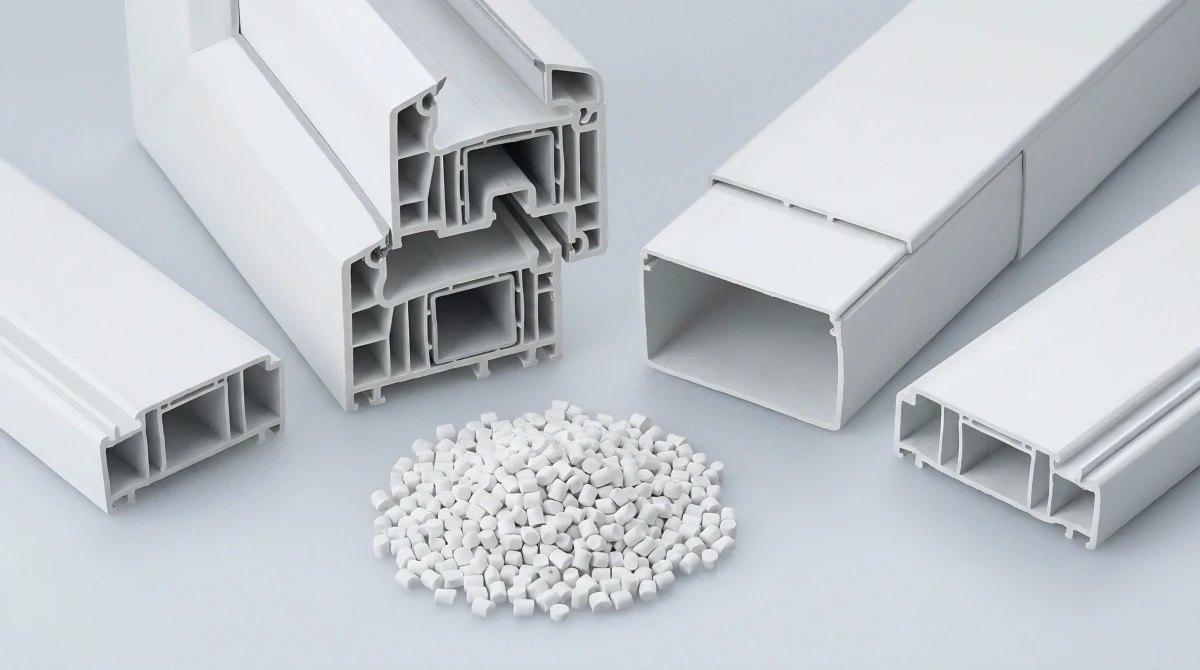
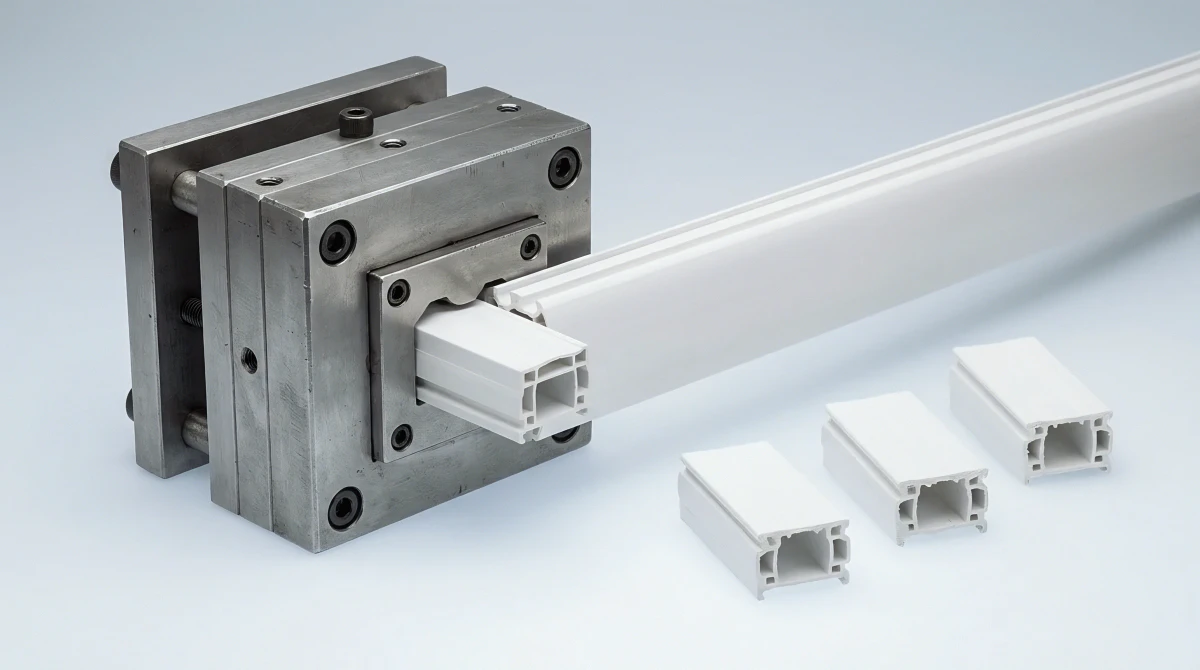
In plastic, drawdown is a main source of locked-in stress. Plastics Technology says rigid PVC cannot take large drawdown, since it builds high residual stress and brittleness on impact. Newey warns that cooling too abruptly also makes a profile brittle. By the calibrator exit, the plastic is meant to be under its heat distortion temperature.Symptoms
A rigid vinyl guide lists excessive thermal shrinkage as a sign of high residual stress. Its remedies are less drawdown and a slower cooling rate. On clear profiles, BWF notes that even low internal stress can show as dimensional change after sawing, milling, bonding, painting or heating.Remedies
For aluminum, the stretch and a stress-relieved temper are the tools. For polycarbonate and PMMA, BWF advises an annealing step once machining is done, to take out the stress the cutting put in. Clamping load on a stressed plastic part can lead to stress cracking, especially near soft PVC parts.