Machining

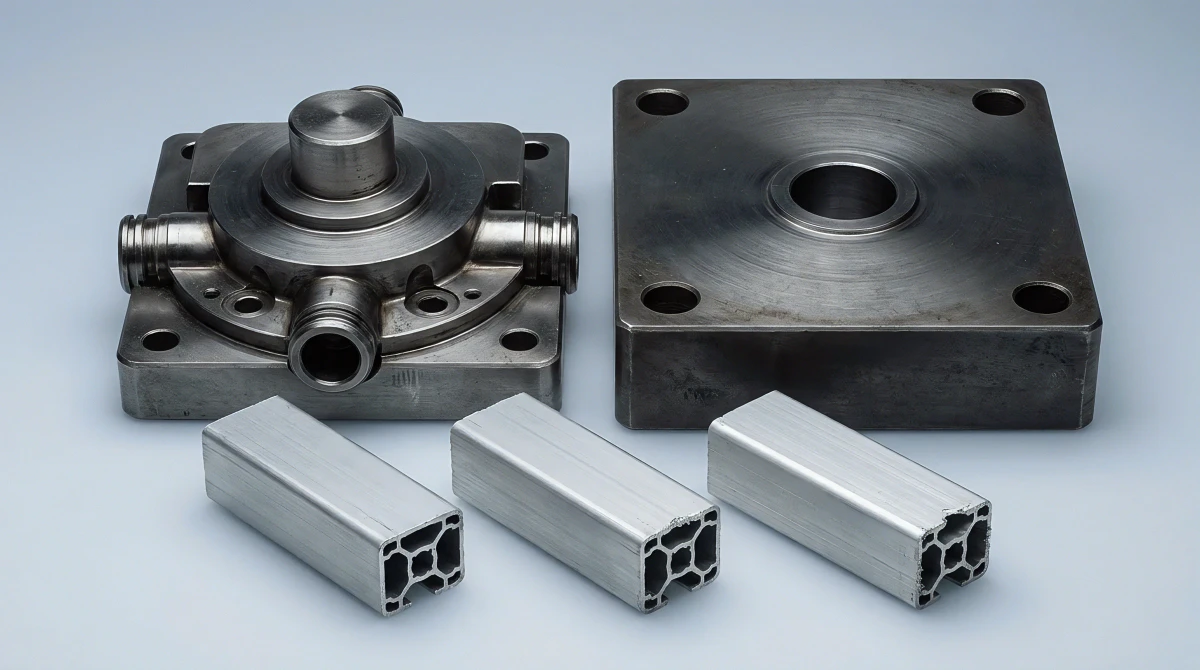
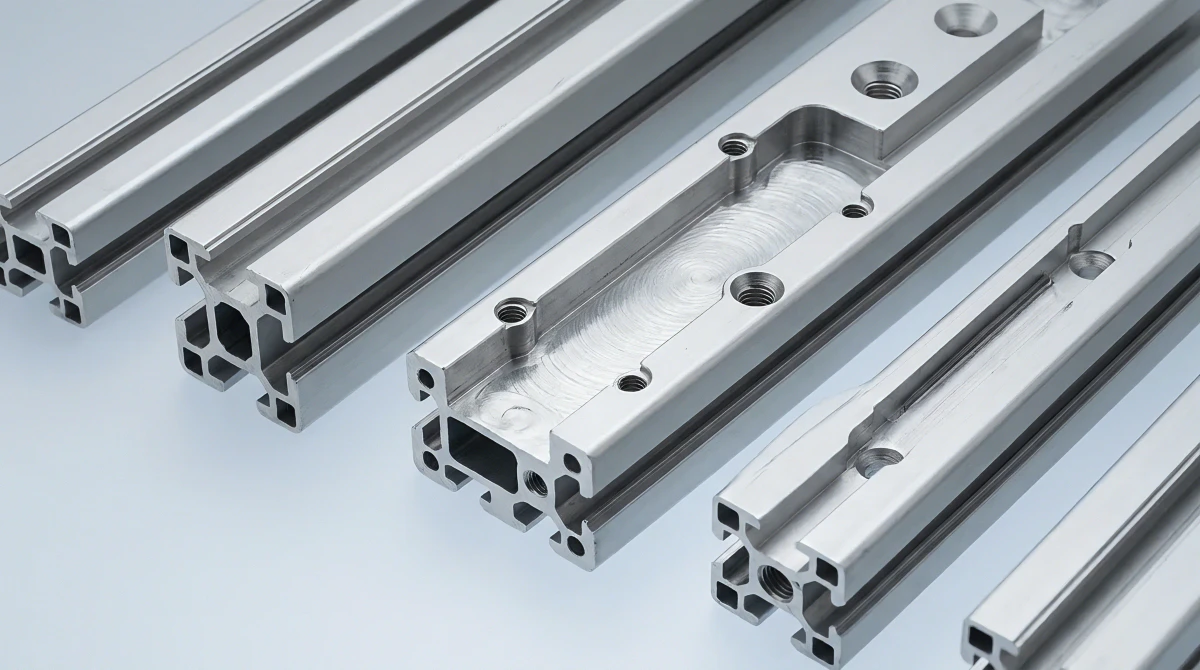
Machining is the removal of material from a cut length by drilling, tapping, milling or similar steps, to add features the die cannot form.

Every Machining article of the Profile Extrusion Resources, newest first, each written from published standards, research and makers’ data.

Meaning

Machining is the removal of material from a cut length by drilling, tapping, milling or similar steps, to add features the die cannot form. It follows cutting and deburring in most plans. It also releases stress locked in the section, which can move the part.

Aluminum Practice

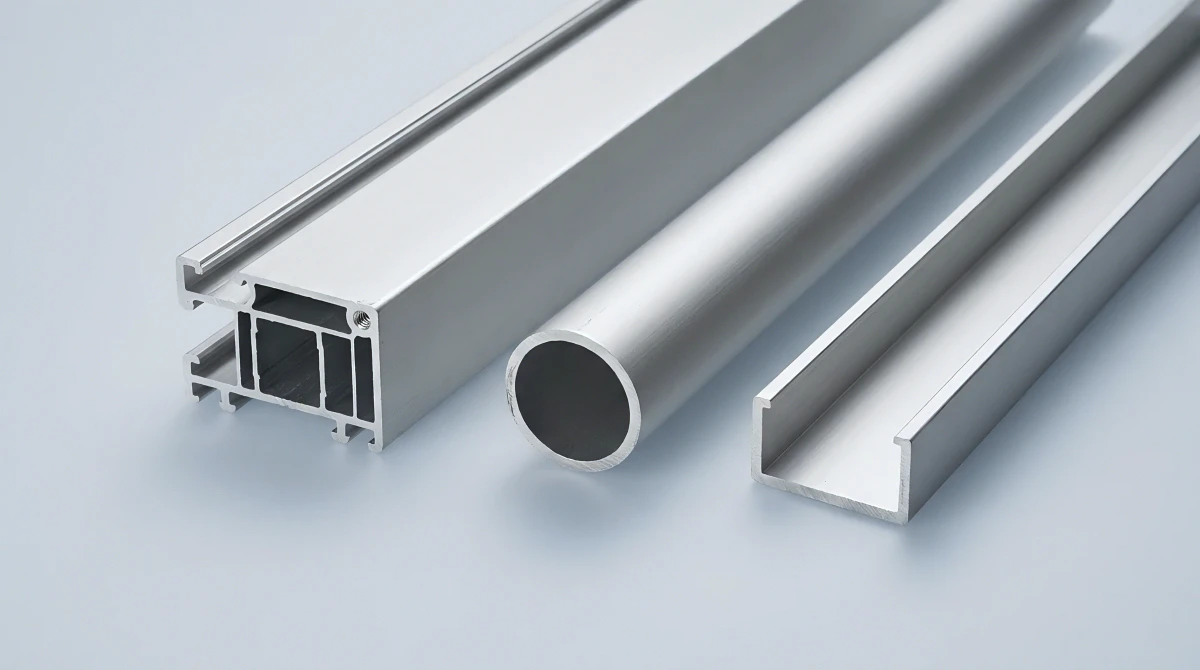
The AEC manual says aluminum extrusions machine quickly with some changes to conventional practice. Tools are finished with more side and top rake than for most metals. Softer alloys such as 3003 and 6063 take large rake angles and light cuts. Both water-soluble and oil-based lubricants are listed as usable. Hydro grades machinability at 2 for 6060, 3 for 6063, 4 for 6005A and 5 for 6082.
Read More

Datums

A machined feature is located from a defined datum, never from a cosmetic or uncontrolled surface. Each dimension on the drawing is marked as machined or as left at the extruded tolerance. A machining center that reaches several faces in one setup keeps those features related to each other.

Threads

Cut tapping removes metal and leaves chips, and a blind hole needs depth below the thread for them. Form tapping displaces metal, makes no chips, needs another pilot diameter and generally holds more torque. The AEC manual also shows extruded slots for Type F self-tapping screws. A 4.2 mm (0.164 in) screw takes a 3.7 mm (0.147 in) slot, plus 0.18 mm (0.007 in).

Stress and Movement

An extrusion holds stress from the quench and the stretch, and removing metal lets it redistribute. An asymmetrical part can bow while it is machined. The AEC manual advises a stress-relieved temper where machined parts hold close limits. BWF says even the low stress of a plastic profile can show as dimensional change after machining, and annealing reduces it.

Plastic Machining

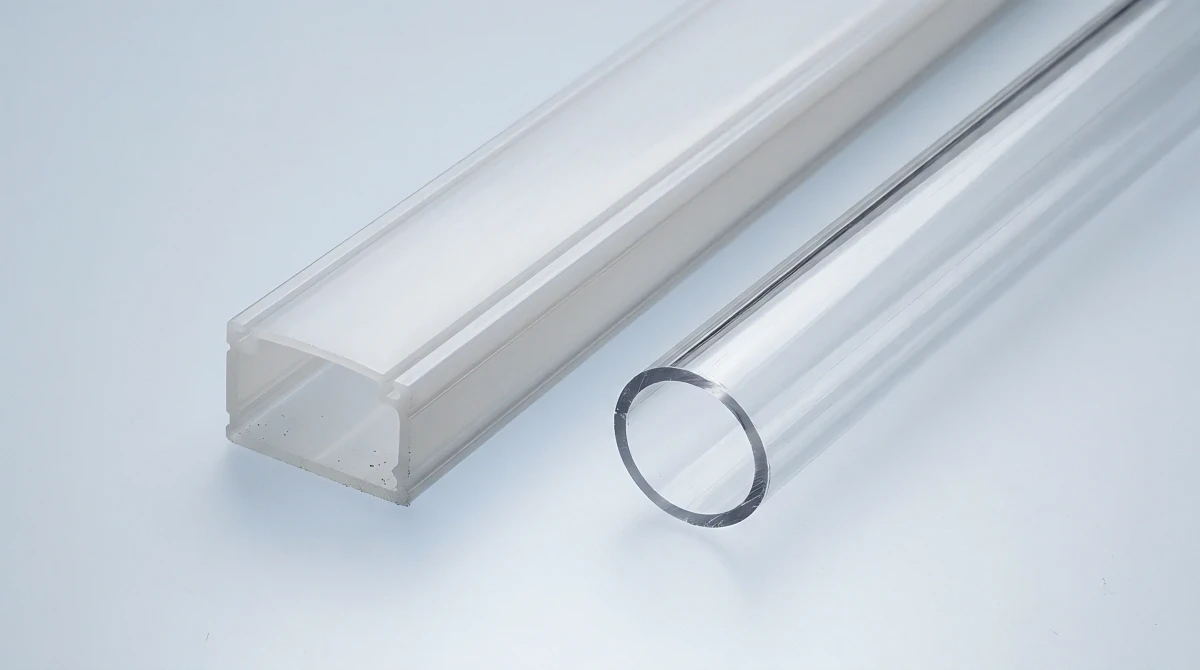
Polycarbonate and PMMA profiles accept most tools used on wood or metal. Speeds are kept low enough that friction does not melt the plastic, and edges are kept sharp. The tool is cooled, for example with directed air, and any lubricant is first tested on the plastic. BWF tolerates machined sizes up to 50 mm (1.97 in) at ±0.3 mm (0.012 in).

Qualicoat and AAMA 2603 to 2605 Coating Specifications for Aluminum Extrusions

Name the Qualicoat class or AAMA tier on the drawing, then fix the approved sample, channel thickness and machining rules that neither standard settles.

What Qualicoat and AAMA 2603, 2604 and 2605 CoverQualicoat is a quality label for coatings on aluminum for architectural use. Its 26th edition, introduced in the document QCT-INTRO-26 valid from 1 January 2026, splits the specifications into three volumes: one for coaters, one for makers of chemical pretreatments and one for powder makers.

Cutting and Machining Extruded Aluminum Lengths

A press saw makes bars into shippable lengths, and a precision saw with the right blade, clamps and datums makes the length the drawing asks for.

The Order of Operations From Bar to Cut LengthCutting comes first in almost any fabrication plan, with deburring and then drilling, punching or machining after it. A burr left from the cut sits where the clamp has to hold the piece for the next step, so the order carries weight.

Cut Length and Saw Cut Tolerance of Extruded Profiles

A length tolerance belongs to a cutting step and a measuring method, so name both with the number.

Saw Tolerances for Plastic Profile LengthsBWF's guidelines of 20 November 2024 give saw tolerances for polycarbonate and PMMA profiles in two cases, offline cut and inline cut. Each is tabulated against the length, in millimeters, and each is tied to a method: lengths up to 4,500 mm are measured on a measuring table that checks length and angle, and longer ones with a measuring tape.

Polycarbonate Extruded Profile Properties and What the Datasheet Leaves Out

Read the resin sheet for viscosity, heat and growth, then ask what it leaves out about the profile itself.

What a Polycarbonate Datasheet States for Profile GradesTwo documents are read side by side here. SABIC's datasheet for LEXAN 135 resin describes the highest-viscosity linear polycarbonate powder in its range, and it names profile extrusion as the processing method.

6063 Aluminum Extrusion Properties in T5 and T6

Read the temper, the thickest wall and the word minimum before trusting any strength figure for this alloy.

What EN AW-6063 Guarantees in T4, T5, T6 and T66Hydro's datasheet for EN AW-6063 (alloy designation AlMg0.7Si) lists minimum mechanical properties taken from EN 755-2:2016 for extruded profile. The values are minimums, and each row is tied to a wall thickness band.

Send the Section Drawing of Your Profile

Send the 2D drawing and the 3D file, with the quantity and the stage of the project. An engineer replies within 1 working day.

The quote form, the mutual NDA and the private folder for your files are on Protolis Atelier, with Profile Extrusion chosen.

Request a Quote