Meaning
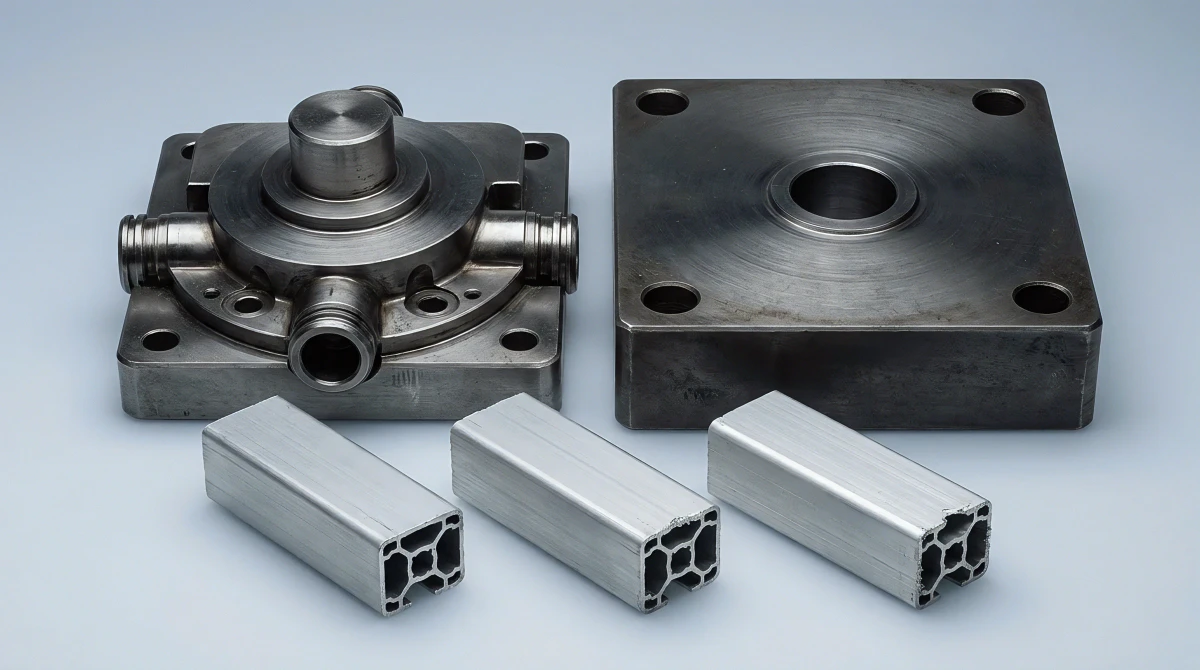
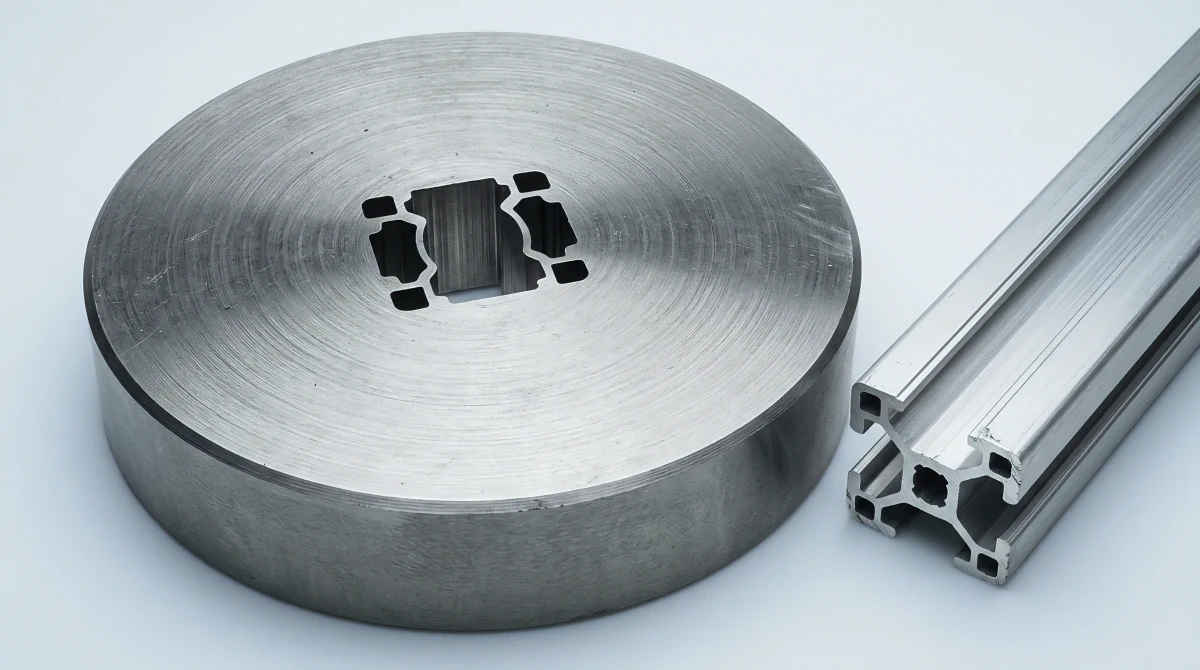
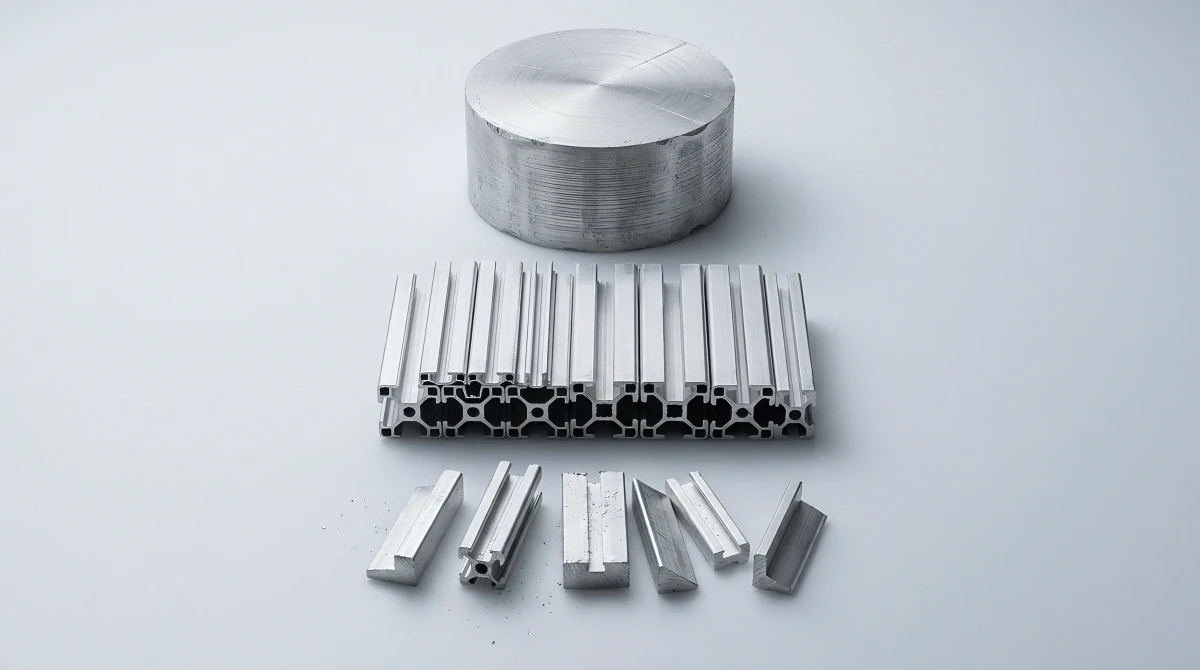
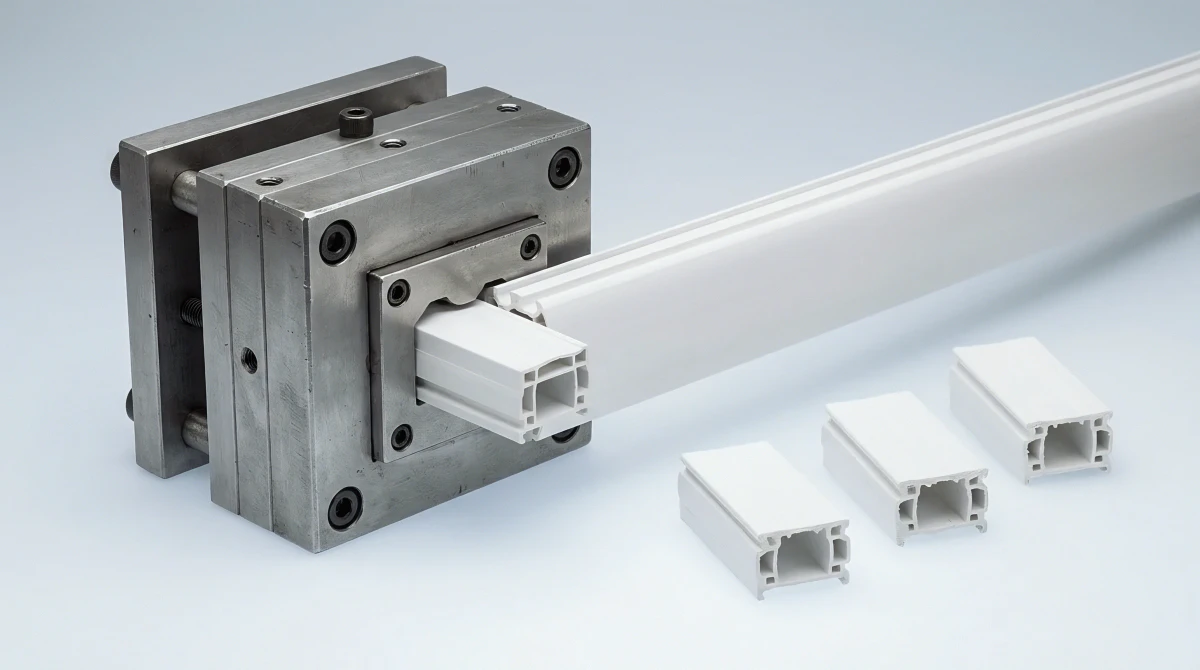
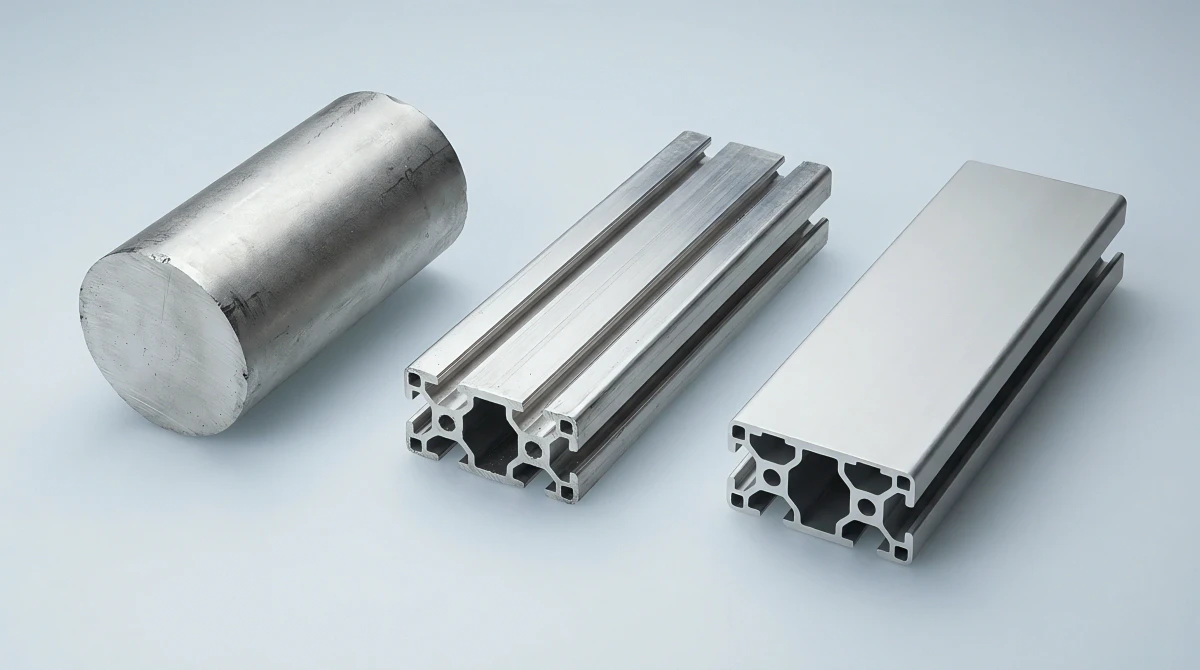
A die is the steel tool whose opening forms the cross-section of a profile as hot metal or melt is pushed through it. For aluminum it is normally H-13 tool steel, heat treated and backed by a stack of support tools. For plastic it is a block whose channel carries the melt from the adapter to the profile outline. Either way, a die is made for one shape, and a plastic die for one resin at one output. Its cost and its weeks of lead time sit before the first meter of any run.Die Types
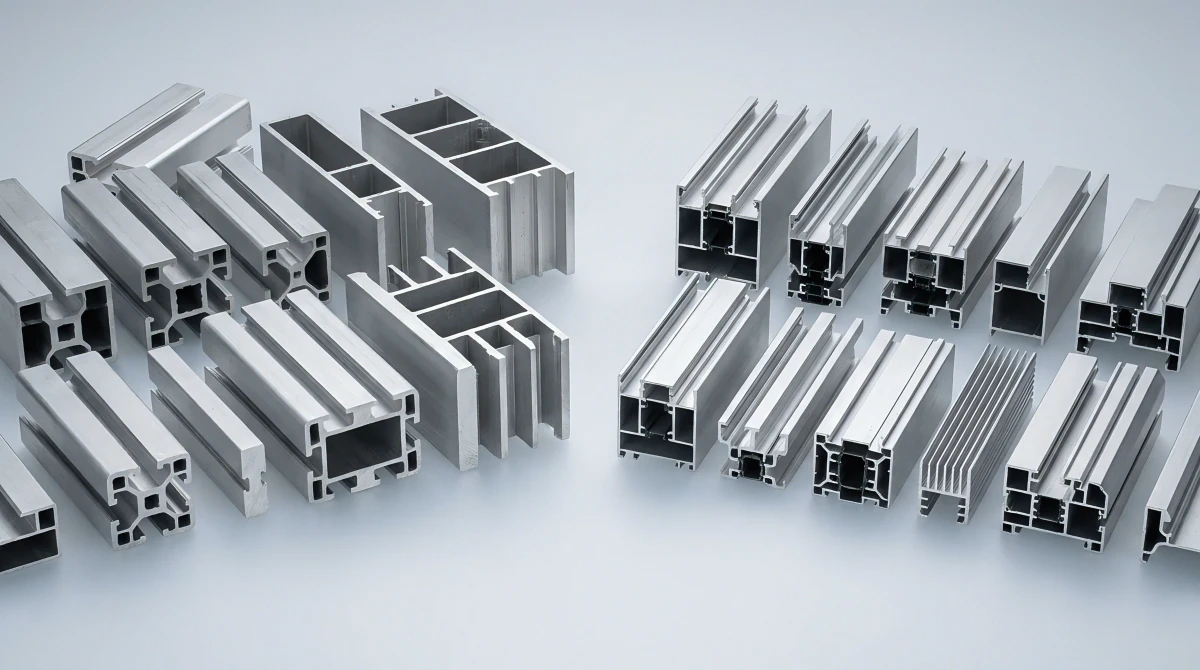
The shape of the void decides the aluminum die. A solid profile needs only a flat steel plate with the outline cut through it. A semihollow profile is judged by its tongue ratio: the area of the partly closed void over the gap width squared. The AEC white paper advises keeping that ratio below about 3. Hollow shapes take a two-part tool, its mandrel carried on a bridge. The metal divides around the bridge and rejoins in a welding chamber, which leaves seam lines along the bar. Small light profiles can share one die, with Hydro citing up to 16 openings.Read More
Bearing and Land
The working surface of an aluminum die is its bearing. It runs at right angles to the die face and controls metal flow and speed by friction. The plastic equivalent is the land, the last stretch of channel running parallel to the flow. Plastics Technology starts the land at 10 times the wall. A 2.5 mm (0.100 in) wall then calls for a land of 25 mm (1 in). For low-viscosity resins or high outputs the ratio rises toward 25 to 1. The same source sets about 34.5 MPa (5,000 psi) as its maximum continuous backpressure.Life in Tonnes
Aluminum die life is set mainly by wear of the bearing and counted in metal extruded. The AEC manual gives a hollow die with 1.0 to 1.5 mm walls about 1.1 t (2,500 lb) before the bearing deteriorates. Nitriding raises that to about 2.9 t (6,500 lb). The same die extrudes about 19 t (42,000 lb) over its whole life, because nitriding can be repeated. Thicker walls and solid dies last longer. A run under about 1 t (2,200 lb) uses only part of the first bearing life for any wall in the table. The figures assume mill finish and standard tolerances, so a visible finish or close limits shorten them.Lead Time and Trial
The AEC white paper and one extruder’s data sheet both put a new aluminum die at 2 to 3 weeks. Another extruder states 2 to 4 weeks, with more time for complex, large or intricate shapes. Hollow dies take longer because the two-part tool is harder to design and machine. A sample is approved before production is scheduled. Hydro adds that correction from trial data is sometimes repeated before the profile meets the final drawing. For plastic profile tooling, the sources opened print no lead time and no typical number of trials.One Resin per Die
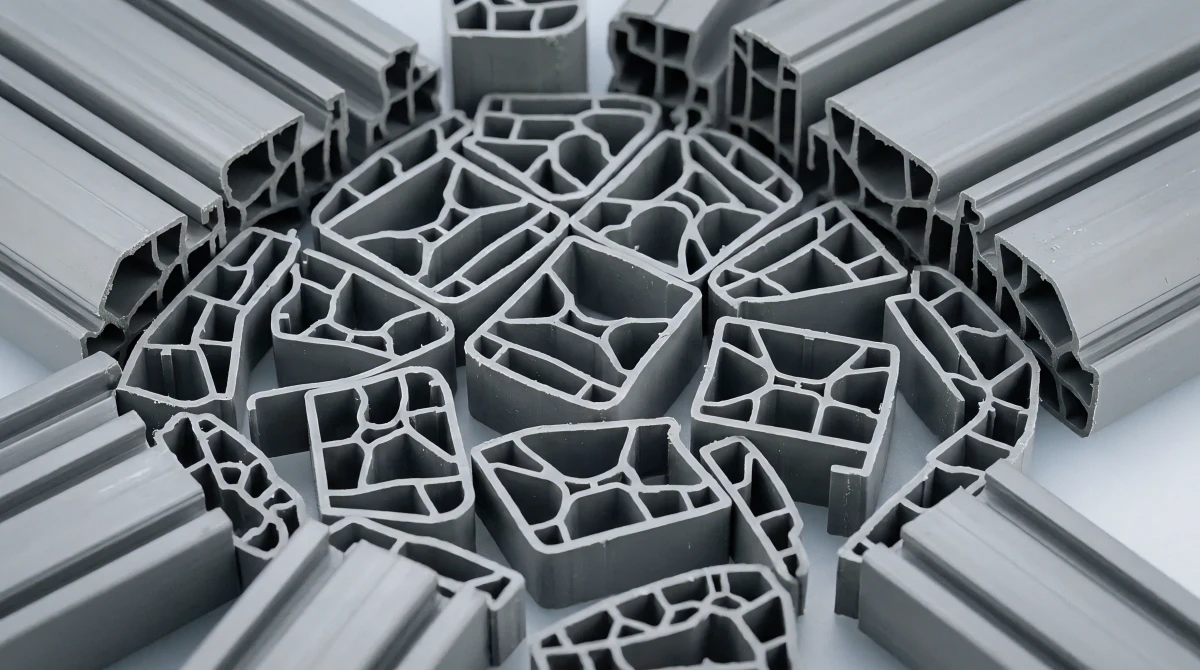
A plastic die is cut with the drawdown of its resin built into every dimension. Every thermoplastic has a specific heat, and with it a drawdown ratio, of its own. Plastics Technology therefore states that a PP die cannot run other polymers. Rigid PVC draws down so little that the same die will not make a smaller size from it. A new resin, a new wall or a new size therefore usually means a new die.Cooling and Care
Some aluminum plants pass liquid nitrogen through parts of the die while it extrudes. Alliance describes it as cooling the tool, extending its life and keeping oxide off the profile. A plastic die is held at its own temperature band. SABIC lists 250 to 260 °C (482 to 500 °F) for LEXAN 135, about 20 °C (36 °F) below the melt. After a PVC run, the Teknor Apex guide has the die neutralized to remove residual hydrochloric acid.